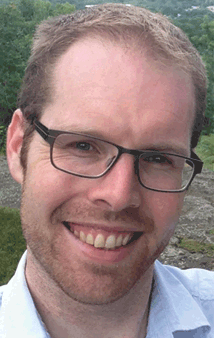
I lead a translational genomics program with the goals of 1) linking cancer genome alterations to clinical outcome; 2) monitoring shifts in cancer and immune cell populations during treatment; and 3) enabling comprehensive genomics as a routine medical test. To achieve these goals, we profile tumours and blood using cell-free DNA, immune repertoire, single-cell and whole-genome sequencing. We also develop software to share these data around the world. Our work advances the knowledgebase and infrastructure necessary to deliver genomic medicine to cancer patients worldwide.
Cell-free DNA in Hereditary And High- Risk Malignancies (CHARM)2: Evaluating the Performance of a cfDNA Blood Test for Early Cancer Detection
Study Status: active
Institute: Princess Margaret Cancer Centre
Health Conditions:
Cancer
External Links:
CHARM 2: Evaluating a Blood Test for Early Cancer Detection in People with Inherited or High Cancer Risk
Study Status: active
Institute: Princess Margaret Cancer Centre
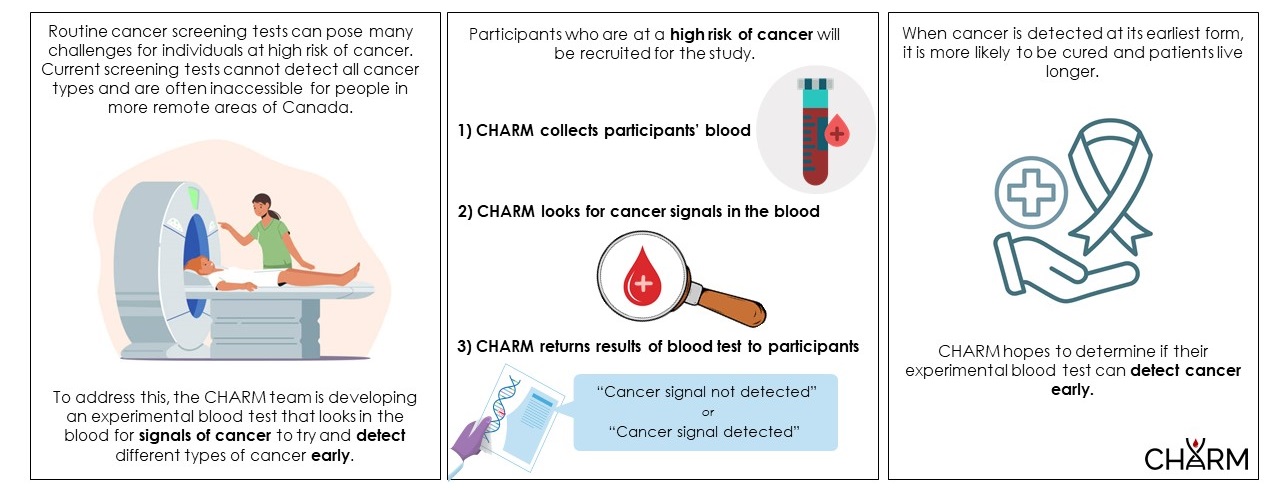
Study Purpose: Through this study, we will learn whether a blood test can detect cancer in people who are born with a higher risk of developing cancer. We will study whether it can find cancer as early as, or even earlier than, current screening methods such as medical imaging and regular check-ups.
Background: When cells break down or die, they release tiny pieces of DNA into the blood. These pieces are called cell-free DNA. Cancer cells release cell-free DNA too, but it looks different from the DNA of healthy cells. These are known as circulating tumour DNA. This means a blood test may be able to find cancer by looking for circulating tumour DNA in the blood.
Some individuals are born with changes in their DNA that give them a much higher chance of getting certain types of cancer. This is called a Hereditary Cancer Syndrome. To check for cancer, people with a known Hereditary Cancer Syndrome often need many tests each year, such as scans, blood work, and regular check-ups. Even with all these tests, cancer is often found late, when it is harder to treat. A simple blood test may be an easier way to screen for cancer, and may help find it sooner.
Study Methods: We are inviting up to 1,000 participants from across Canada who have certain Hereditary Cancer Syndromes and have been cancer-free for at least three years. Each participant will be randomly placed into one of two groups. One group will get the blood test three times a year for four years, along with their usual cancer screening. The other group will only have their usual cancer screening. At the end of the study, we will compare the two groups to see how many participants had cancer, and whether the blood test helped find it earlier.
Health Conditions:
Cancer
Dr. Trevor Pugh's research program is focused on understanding clinical implications of clonal shifts in cancer and non-cancerous cell populations during treatment, most recently using cell-free DNA, immune repertoire, and single cell RNA-seq sequencing. He has contributed to multiple large-scale genomics and data-sharing programs including AACR GENIE and the Terry Fox Canadian Comprehensive Cancer Centre Network. Previously, as a postdoctoral fellow with Dr. Matthew Meyerson at the Dana-Farber Cancer Institute and Broad Institute of Harvard and MIT, Dr. Pugh led landmark cancer genome studies describing three pediatric solid tumours: medulloblastoma, neuroblastoma, and pleuropulmonary blastoma. During this time, he also completed a clinical laboratory fellowship in the Harvard Medical School Genetics Training Program with Dr. Heidi Rehm. Originally from Vancouver, Dr. Pugh received a PhD in Medical Genetics from the University of British Columbia.
- Lead, Clinical Genomics Program, Princess Margaret Cancer Centre
- Professor, Department of Medical Biophysics, University of Toronto
- Senior Investigator and Director, Genomics, Ontario Institute for Cancer Research