My research focuses on developing computational models of brain circuits to understand the biological mechanisms of cognitive aging, mental health, and neurodegeneration. We integrate biophysical modeling with machine learning to analyze genomic, cellular, and clinical data, aiming to build predictive frameworks for brain health across the lifespan. A central focus of my lab is the role of neuron–glial–vascular interactions in shaping neural processing and resilience to disease.
To harness brain disorders, we combine mechanistic simulations with data-driven methods to construct biologically grounded digital twins of neural systems. These models integrate molecular pathways, electrophysiology, and network connectivity with multimodal datasets, including neuroimaging, transcriptomics, and clinical measurements. By embedding physical and biological constraints within machine-learning architectures, we aim to develop interpretable predictive models capable of simulating disease trajectories, identifying early biomarkers, and forecasting therapeutic response.
Our long-term objective is to translate these approaches into scalable digital technologies for monitoring and diagnosis of age-related brain disorders, including Alzheimer's disease and related dementias. By bridging computational neuroscience, bioinformatics, and artificial intelligence, this research contributes to the development of clinically actionable tools for precision brain health and personalized medicine.
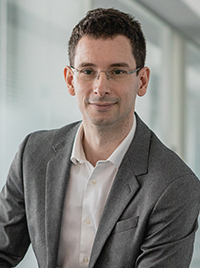
Maurizio De Pittà is an Assistant Professor in the Departments of Physiology and Medical Biophysics at the University of Toronto and a Scientist at UHN's Krembil Brain Institute. He is a computational neuroscientist whose work lies at the intersection of biophysical modeling, applied mathematics, and data-driven artificial intelligence, with a particular focus on neuron–glial circuits and astrocyte physiology.
Dr. De Pittà received his PhD in Electrical Engineering from Tel Aviv University and completed postdoctoral training in theoretical and computational neuroscience at the University of Chicago and INRIA (France). Since establishing his independent research program in 2018, he has led interdisciplinary efforts to understand how interactions between neurons, glial cells, and vascular components shape brain function in health and disease. His work has contributed to the emergence of computational glioscience, a field that integrates multiscale modeling with experimental and clinical data to generate predictive theories of brain organization.
Dr. De Pittà’s research has been published in leading journals, including PNAS and Science, and supported by competitive funding from national and international agencies in Europe, Canada, and the United States. He is the co-author of the textbook Computational Glioscience (Springer) and actively contributes to training initiatives in computational neuroscience and neuro-AI. Through close collaborations with clinicians, engineers, and data scientists, his work aims to translate mechanistic insights into clinically actionable tools for neurodegenerative and age-related brain disorders.
- Assistant Professor, Department of Physiology, University of Toronto
- Assistant Professor, Department of Medical Biophysics, University of Toronto
- Adjunct Professor, Graduate Program in Neurosciences, University of the Basque Country, Spain
- Affiliated Scientist, Basque Center for Applied Mathematics, Spain