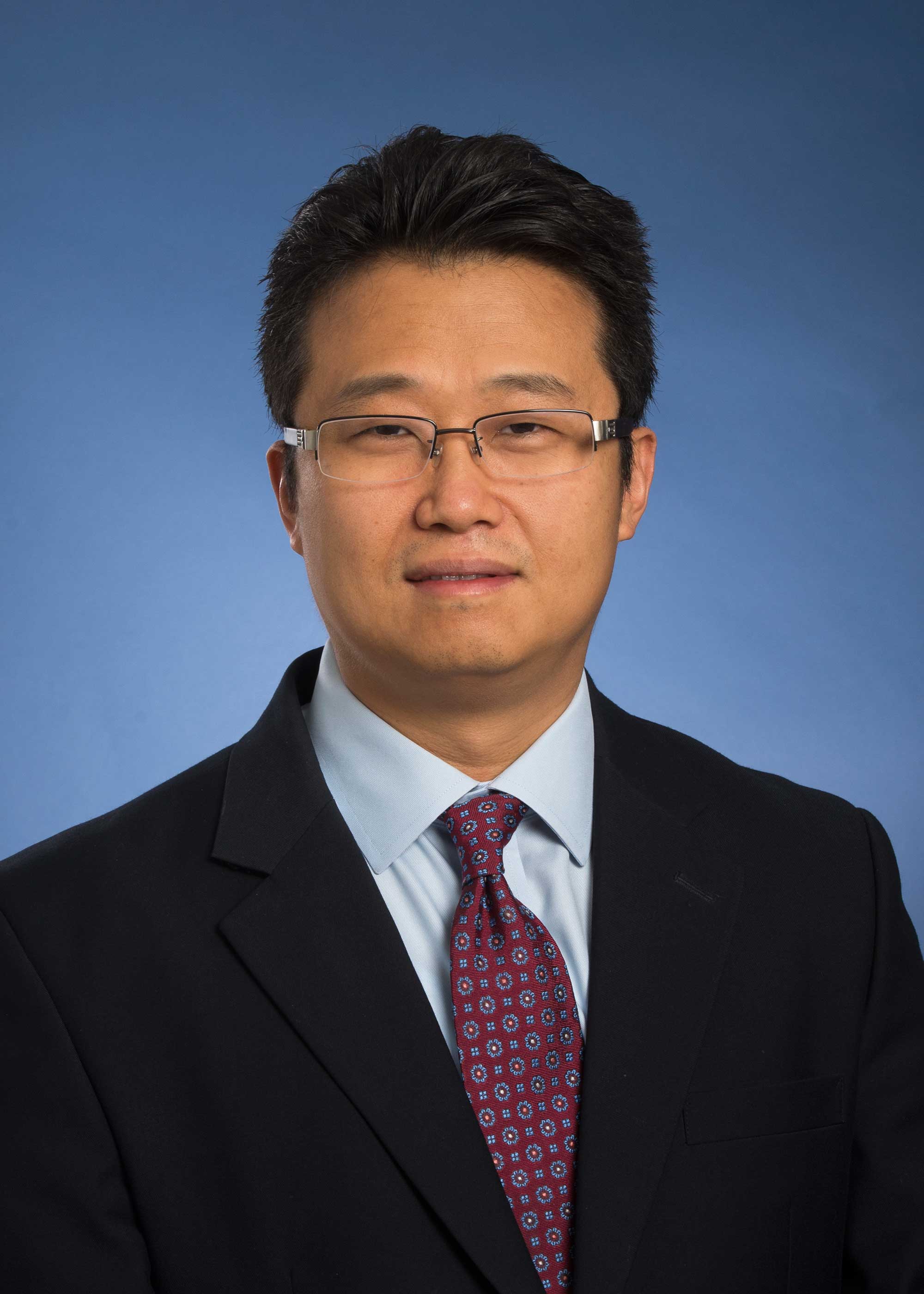
Dr. Lee’s research interests include heart failure epidemiology and outcomes, implantable cardioverter defibrillator utilization and outcomes, cardiovascular disease risk factors and prevention, and quality of care and outcomes research.
Exploring the Feasibility of the Creyos Cognitive Assessment Tool Among Patients with Heart Failure
Study Status: completed
Institute: Toronto General Hospital Research Institute
Study Purpose: Patients with Heart Failure (HF) have a higher chance of declining cognitive function. A decline in cognitive function means a change in memory, verbal ability, concentration and reasoning. Due to this change, patients may have trouble managing medications and sharing what symptoms they are experiencing. Factors such as level of education, whether someone has lots of social supports, and living with multiple illnesses can impact the decline and how the patients manage the cognitive changes. More research is needed to look at the connection between the heart and the brain, and we need to find useful cognitive tests so HF patients can be screened early to detect any cognitive changes.
We wanted to determine if Creyos would be a good test to use with HF patients. The study focused on how many patients completed the test, how long it took to complete the tests, and what participants thought of the tests. We also compared the results of our participants to the general population.
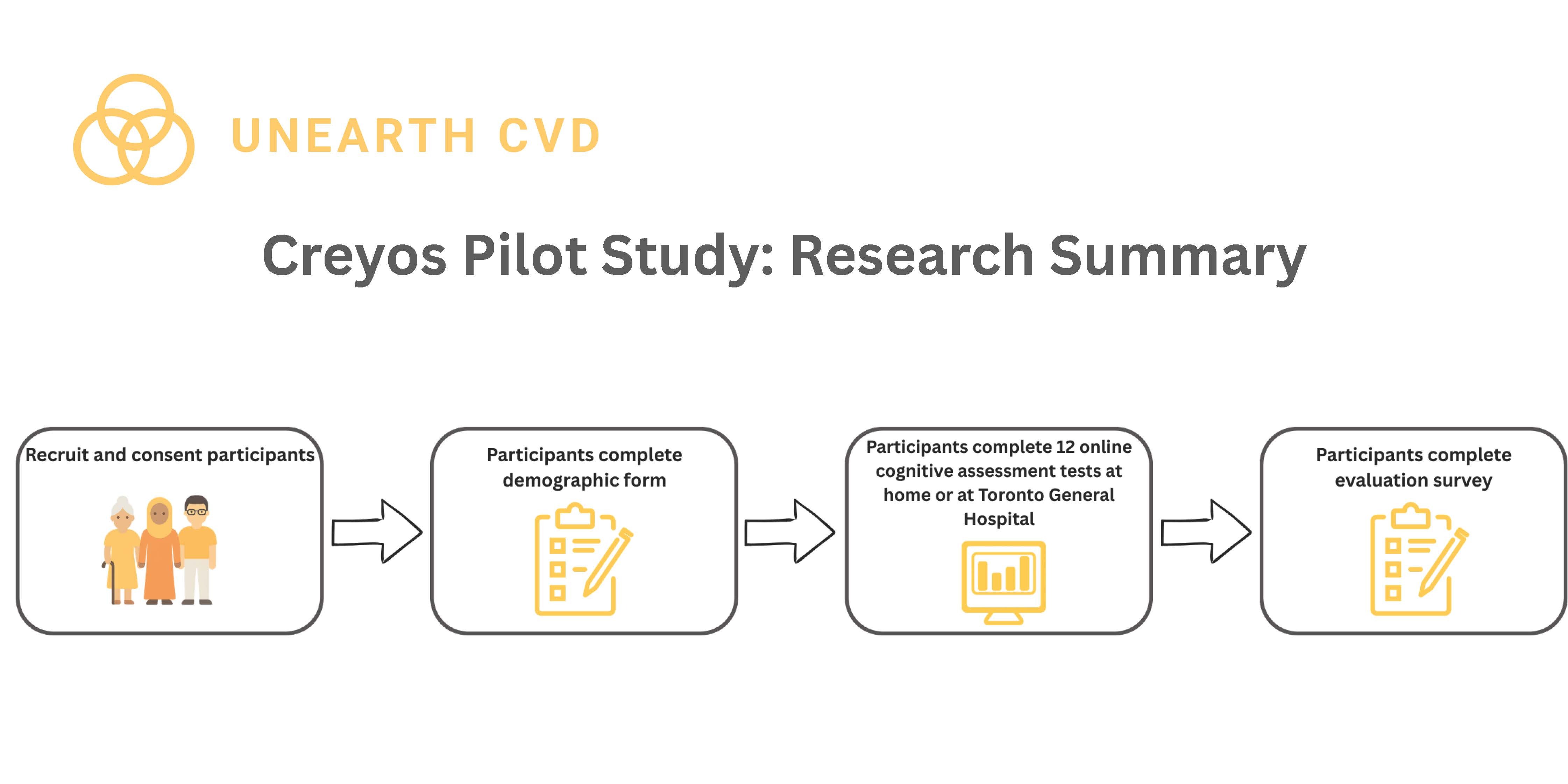
Background: There are many cognitive assessment tools available, but most of them must be done in-person. We wanted to use a digital tool that patients could use remotely. For this reason, we decided to use the Creyos Cognitive Assessment tool. Creyos is an online tool where participants complete 12 cognitive tests. The tests measure different aspects of cognition: short-term memory, concentration, verbal ability and reasoning.
Study Methods: 40 participants were recruited from the Heart Function Clinic at Toronto General Hospital in Ontario, Canada. 30 participants had HF, and 10 participants did not have HF and were general cardiology patients.
Participants were asked to complete all 12 tests, a demographic survey, and an evaluation survey so they could share more about their experience completing the Creyos tests. Participants had a choice to complete the study tasks at the Heart Function clinic or from home. The research team collected information about participant medical history. After participants completed the study, the research team used statistical methods to summarize and analyze the results.
Key Findings: Compared to the general population, the participants in our study did worse on the tests focused on concentration, reasoning and verbal ability. However, patients with HF did better in tests measuring short-term memory, compared to the general population.
Overall, the feedback from the evaluation survey was positive. Below are some of the survey results:
• 85% of participants found the tool easy to access and start
• 18% requested assistance from a more technical person to be able to do the test
• 83% felt they were able to complete all the tests within a reasonable amount of time
A few participants mentioned that some of the test instructions were confusing. Some also mentioned that was it difficult to complete the tests because they did not have computer skills. Participants with poor eyesight mentioned that they had trouble seeing some tests on the screen.
Acknowledgements: This project has been made possible by the Canada Brain Research Fund (CBRF), an innovative arrangement between the Government of Canada (through Health Canada) and Brain Canada Foundation, and the Heart and Stroke Foundation of Canada. To date, Health Canada has invested over $130 million through the CBRF, which has been matched by Brain Canada Foundation and its donors and partners. The views expressed herein do not necessarily represent the views of the Minister of Health or the Government of Canada.
Health Conditions:
Heart disease and disorders
Dr. Lee is the Ted Rogers Chair in Heart Function Outcomes and a staff cardiologist at the Peter Munk Cardiac Centre of University Health Network. He is a Professor of Medicine at the University of Toronto, and senior scientist and leader of the Cardiovascular Program at ICES. Dr. Lee obtained his MD and completed postgraduate training in Internal Medicine and Cardiology at the University of Toronto. He completed a PhD in the section of Clinical Epidemiology in the Institute for Health Policy, Management, and Evaluation at the University of Toronto, and a post-doctoral fellowship at the National Heart, Lung, and Blood Institute’s Framingham Heart Study. He has published 261 peer-reviewed articles in journals such as the New England Journal of Medicine, JAMA, Lancet, Annals of Internal Medicine, JAMA Internal Medicine, Journal of Clinical Oncology, Circulation, JACC, and the European Heart Journal. His Scopus h-index is 57, and his articles have been cited over 13,000 times in the peer-reviewed literature. Dr. Lee has expertise in outcomes and health services research, health policy, prospective studies and large database research. He has conducted numerous studies which have linked granular clinical databases to conduct prospective studies or pragmatic randomized trials using ICES databases.
For a list of Dr. Lee's publications, please visit PubMed, Scopus or ORCID.
Selected publications:
Raslan IR, Ross HJ, Fowler RA, Scales DC, Stelfox HT, Mak S, Tu JV, Farkouh ME, Stukel TA, Wang X, van Diepen S, Wunsch H, Austin PC, Lee DS. The associations between direct and delayed critical care unit admission with mortality and readmissions among patients with heart failure. Am Heart J 2021 [in press]
Crosier R, Austin PC, Ko DT, Lawler PR, Stukel TA, Farkouh ME, Wang X, Spertus JA, Ross HJ, Lee DS. Intensity of guideline-directed medical therapy for coronary heart disease and ischemic heart failure outcomes. Am J Med 2021 [n press]
Anderson K, Ross HJ, Austin PC, Fang J, Lee DS. Healthcare utilization before first heart failure hospitalization: identifying opportunities to pre-emptively diagnose impending decompensation. JACC Heart Fail 2020 [in press]
Tam DY, Dharma C, Rocha R, Farkouh ME, Abdel-Qadir H, Sun LY, Wijeysundera HC, Austin PC, Udell J, Gaudino M, Fremes SE, Lee DS. Long-term survival after coronary artery bypass grafting and percutaneous coronary intervention in multivessel disease and diabetes. J Am Coll Cardiol 2020; 76(10):1153-1164
Angaran P, Dorian P, Ha ACT, Thavendiranathan P, Tsang W, Leong-Poi H, Woo A, Dias B, Wang X, Austin PC, Lee DS. Association of left ventricular ejection fraction with mortality and hospitalizations. J Am Soc Echocardiogr 2020; 33(7):802-811
Abdel-Qadir H, Thavendiranathan P, Fung K, Amir E, Austin PC, Anderson GS, Lee DS. Association of early-stage breast cancer and subsequent chemotherapy with risk of atrial fibrillation after early stage breast cancer and chemotherapy. JAMA Netw Open 2019; 2(9):e1911838
Braga JR, Leong-Poi H, Rac VE, Austin PC, Ross HJ, Lee DS. Trends in the use of cardiac imaging for patients with heart failure in Canada. JAMA Netw Open 2019; 2(8):e198766
Lee DS, Lee JS, Schull MJ, Borgundvaag B, Edmonds ML, Ivankovic M, McLeod SL, Dreyer JF, Sabbah S, Levy PD, O’Neill T, Chong A, Stukel TA, Austin PC, Tu JV. Prospective validation of the emergency heart failure mortality risk grade for acute heart failure: the acute congestive heart failure urgent care evaluation (ACUTE) study. Circulation 2019; 139:1146-56
Atzema CL, Austin PC, Yu B, Schull MJ, Jackevicius CA, Ivers NM, Rochon PA, Lee DS. Effect of early physician follow-up on mortality and subsequent hospital admissions after emergency care for heart failure: a retrospective cohort study. CMAJ 2018; 190 (50): E1468-E1477
Thavendiranathan P, Abdel-Qadir H, Fischer HD, Liu Y, Camacho X, Amir E, Austin PC, Lee DS. ‘Risk-imaging mismatch’ in cardiac imaging practices for women receiving systemic therapy for early stage breast cancer: a population-based cohort study. J Clin Oncol 2018; 36(30):2980-2987
- Ted Rogers Chair in Heart Function Outcomes, UHN
- Professor, Department of Medicine, University of Toronto
- Professor, Institute of Health Policy, Management and Evaluation, University of Toronto
- Faculty Member, Institute of Medical Science, University of Toronto
- Senior Core Scientist, ICES