Decoding a Rare Genetic Heart Threat
Study reveals how mutations can trigger arrhythmias and cardiac arrest in a rare condition.
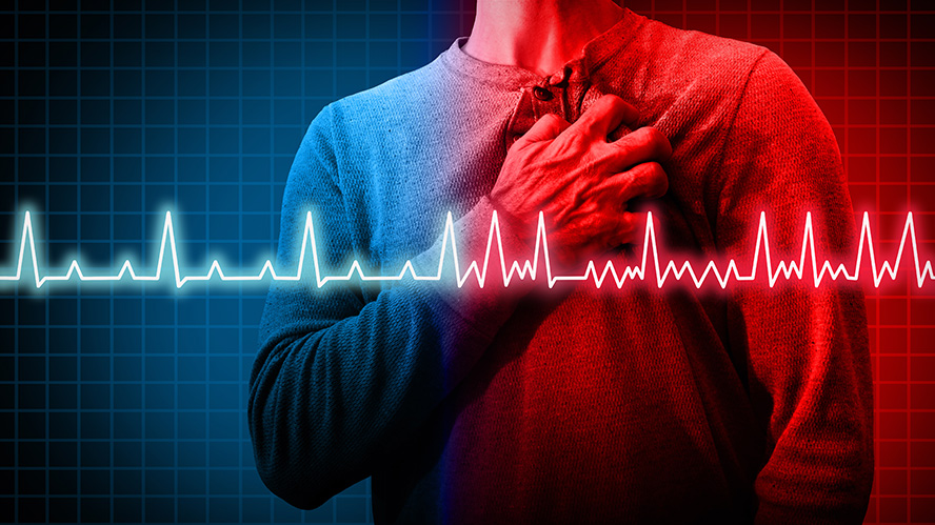
In short QT syndrome, the electrical recovery of the heart muscle after each heart beat is accelerated and creates a risk of sudden arrhythmia.
Short QT syndrome (SQTS) is a rare, inherited condition that can cause sudden cardiac death. A new study from UHN, the University of Toronto, and collaborators in Germany provides insight into the molecular mechanisms behind SQTS using patient-derived lab models.
In SQTS, problems with the heart’s electrical system increase the risk of heart rhythm problems, called arrhythmias, which can lead to sudden death. Despite improved awareness and diagnosis of SQTS over the years, scientists still do not entirely understand the underlying molecular causes or how to optimally treatment the condition.
Several genes have been implicated in this condition, including SLC4A3 (Solute Carrier Family 4 Member 3)—involved in mediating the exchange of ions (charged atoms) across cell membranes and, ultimately, the pH inside cells. However, analyses of mutations in SLC4A3 have yet to explain how altered pH leads to arrhythmias and cardiac death.
To address this knowledge gap, the team examined two new SLC4A3 mutations by generating lab-grown models of cardiomyocytes—heart muscle cells—from patient samples. They found that in models with mutated SLC4A3, the disruption of ion movement across the cell membrane caused the cells to have a higher pH or be more alkaline. The increased pH resulted in a fewer calcium ions moving into the cells, which led to the shortening of the heart’s electrical recovery after each heart beat and irregular, arrhythmia-like beating.
This study reveals, for the first time, the mechanisms underlying SQTS related to pH imbalance and how SLC4A3 gene mutations lead to heart problems. These findings open the door to potential new, targeted drug treatments.
Dr. Michael Gollob is a Senior Scientist at UHN and a Professor in the Department of Physiology in the Temerty Faculty of Medicine at the University of Toronto. He is the co-senior author of this study.
Dr. Ibrahim Akin, from the University Medical Centre Mannheim (UMM), University of Heidelberg, and Dr. Ibrahim El-Battrawy, from Ruhr University Bochum, are also co-senior authors of the study.
The first authors of the study are:
● Zenghui Meng – University Medical Centre Mannheim (UMM), University of Heidelberg
● Chen Yan – University Medical Centre Mannheim (UMM), University of Heidelberg
● Christina Holscher – University Medical Centre Mannheim (UMM), University of Heidelberg
● Boldizsar Kovacs – Inselspital University Hospital of Bern
● Saltanat Zhazykbayeva – Ruhr University Bochum
● Oliver Jarkas – Ruhr University Bochum
This work was supported by the Ian Copland Arrhythmia and Sudden Death Research Fund at the University of Toronto, the German Center for Cardiovascular Research, the Hector- Stiftung, Else-Kröner-Fresenius Foundation, German Heart Foundation, EU Horizon 2020 research and innovation program, and UHN Foundation.
See the manuscript for competing interests.
Meng Z, Kovacs B, Yan C, Hölscher C, Zhazykbayeva S, Jarkas O, Zou C, Cyganek L, Zorio E, Braza-Boils A, Pablo Ochoa J, Rehbehn N, Fan X, Lei X, Liu R, Tong S, Liu F, Xue Z, Bober SL, Zhao B, Duru F, Aweimer A, Köppel A, Burau K, Mügge A, Berger W, Hamdani N, Zhou X, Saguner AM, Akin I, Gollob MH, El-Battrawy I. SLC4A3-related short QT syndrome assessed in human induced pluripotent stem cell-derived cardiomyocytes: mechanisms of ventricular arrhythmia and sudden cardiac death. Eur Heart J. 2026 Mar 5:ehag068. doi: 10.1093/eurheartj/ehag068. Epub ahead of print.