Rehumanizing Classroom Care
Human-centred clinical letters can help schools better support children with disabilities.
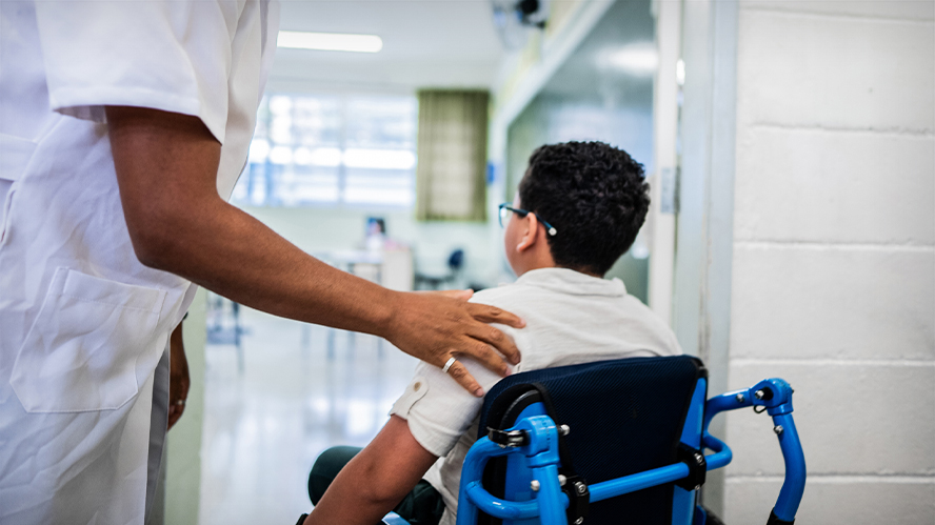
Many children with disabilities require individualized school supports, yet disjointed communication between clinicians and educators can make that support difficult to obtain.
Children with disabilities often struggle to access appropriate school supports. Clinical letters are commonly used by clinicians to communicate medical information, management plans, and care recommendations to schools. A new study from The Institute for Education Research (TIER) at UHN highlights the importance of using a critically reflective approach when writing clinical letters to improve communication and collaboration between clinicians, families, and schools.
Clinical letters are a key form of communication between clinicians and schools. However, clinicians may be unaware of the everyday challenges that shape school-based care, such as limited resources and rigid policies, which can hinder how effectively schools apply clinicians' recommendations.
A critically reflective approach encourages clinicians to reflect on their assumptions and consider the systemic barriers that families and schools face. It also supports writing in a more collaborative, human-centred way, guiding clinicians to describe each child by highlighting strengths and goals, not just challenges, and to use team-oriented language, such as “We would like to work with you to…”.
To investigate the impact of critically reflective writing, the research team interviewed 17 parents and educators across Ontario and assessed their responses to clinical letters written by clinicians after completing training in this approach.
Participants felt that the critically reflective letters rehumanized children with disabilities and promoted stronger communication and collaboration. Shifting from challenge-focused descriptions to highlighting the children’s strengths and abilities changed how educators perceived them. Participants felt this made it easier to understand children’s needs and could support more trusting, open communication between families and educators. Improved communication and collaboration could also create new opportunities for shared advocacy by helping families and educators build a common understanding of challenges and identify where change is needed.
Overall, more thoughtful, human-centred clinical writing can help bridge communication gaps between health and education systems, ultimately improving support for children with disabilities.
Dr. Victoria Boyd, first and corresponding author of the study, is a Scientific Associate at The Institute for Education Research (TIER) and the Centre for Advancing Collaborative Healthcare & Education (CACHE) at UHN.
Dr. Nicole Woods, co-author of the study, is a Senior Scientist and Director of TIER. Dr. Woods is also a Scientist at The Wilson Centre at UHN as well as an Associate Professor in the Department of Family and Community Medicine, the Department of Surgery, and the Institute of Health Policy, Management and Evaluation at the University of Toronto (U of T).
Dr. Stella Ng, senior author of the study, is a TIER Scientist, Scientist at The Wilson Centre, and Director of CACHE at UHN. At U of T, Dr. Ng is an Associate Professor in the Department of Speech-Language Pathology and a Faculty Member of the Rehabilitation Sciences Institutes.
This work was supported by UHN Foundation, the Spencer Foundation, the Social Sciences and Humanities Research Council, Dr. Boyd’s Kimel-Schatzky Fellowship, and Dr. Ng’s Ontario Ministry Early Researcher Award and Arrell Family Chair in Health Professions Teaching.
Boyd, VA, Woods, NN., Campbell, WN, Kumagai, AK, & Ng, SL. (Re)humanizing clinical documentation for disabled children: a cascade of potential outcomes of critically reflective practice. Disability & Society. 2026 Feb 01. DOI: 10.1080/09687599.2025.2536587