
Dr. Fleshner's clinical practice is in urologic oncology with research interests in prostate and bladder cancer.
PSA Detect & Protect: Feasibility and effectiveness of Prostate-specific antigen (PSA) testing in underserved communities
Study Status: completed
Institute: Princess Margaret Cancer Centre
Health Conditions:
Cancer
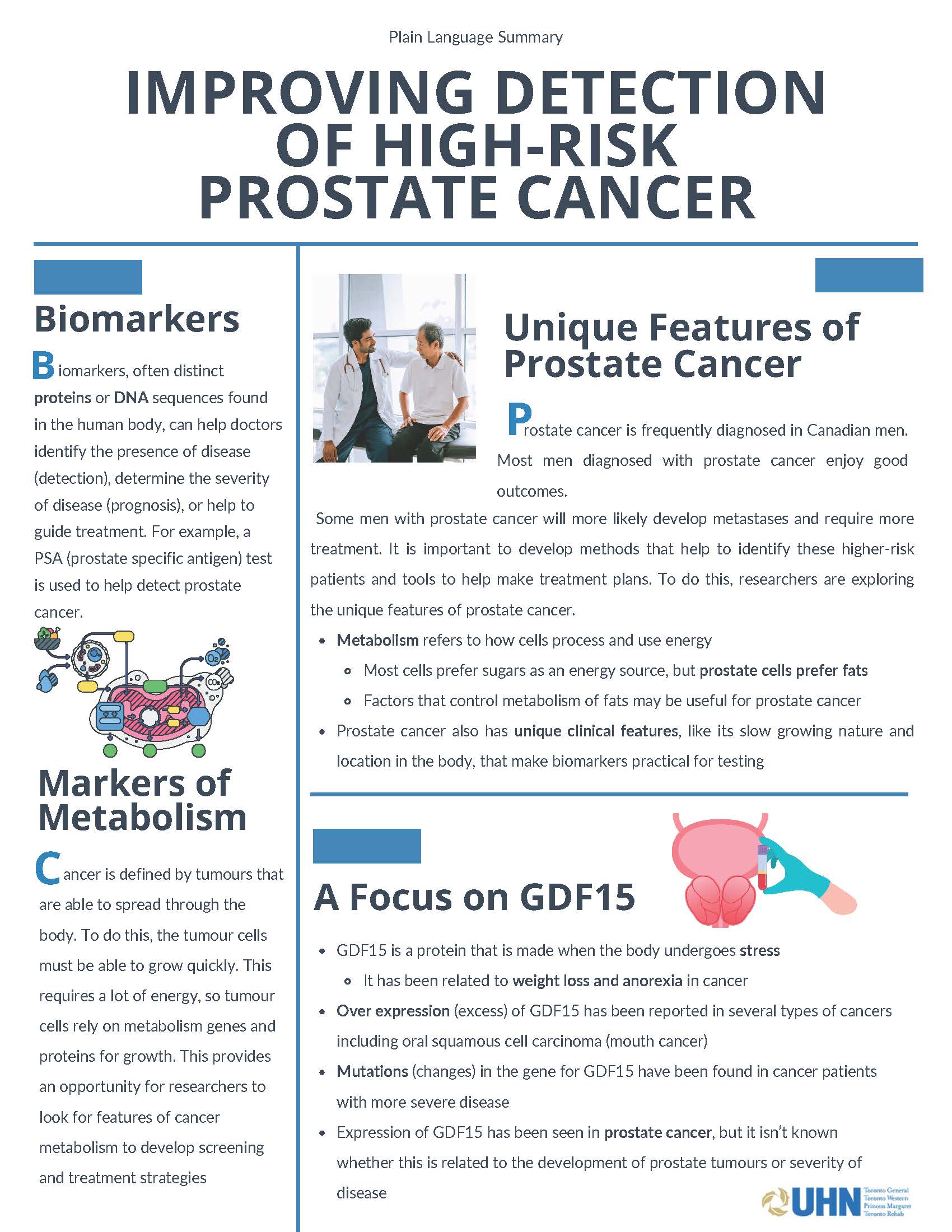
Improving Detection of High-risk Prostate Cancers
Study Status: completed
Institute: Princess Margaret Cancer Centre
Health Conditions:
Cancer
Impact of COVID-19 pandemic on willingness to participate in the McCain Genitourinary (GU) Biobank
Study Status: completed
Institute: Princess Margaret Cancer Centre
Study Purpose: To find out if the COVID-19 pandemic has changed how people in the Genitourinary Oncology clinic feel about scientific research.
Background: The COVID-19 pandemic has impacted the mental health and well-being of people around the world. This might affect how willing they are to participate in scientific research. If people are less likely to participate in research, it could take longer to find new treatments.
Study Methods: Patients in the Genitourinary Oncology clinic were given an optional questionnaire to fill out.
Key Findings: Most patients had either a positive or no change in their opinions about scientific research. Many patients still wanted to participate in research, whether it was online or in person.
For those who had a negative opinion about research, understanding their reasons can help us improve our research methods to make sure everyone feels comfortable participating."
Health Conditions:
Cancer
Bringing prostate cancer screening to those who need it most
Study Status: active
Institute: Princess Margaret Cancer Centre
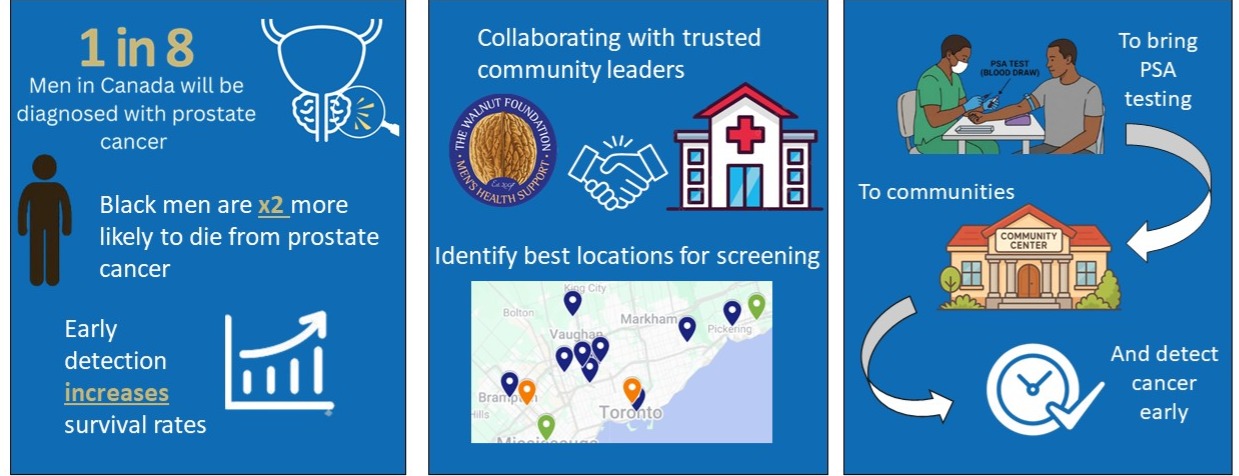
Study Purpose: Men in the Black community are 70-80% more likely to develop prostate cancer, and more likely to die from it than others. This health disparity can be attributed to social and biological factors, including access to healthcare, lifestyle, and ancestry.
Background: Prostate cancer is the most common cancer among men in Canada. It is also the third leading cause of death in Canadian men. Additionally, current clinical guidelines for prostate cancer screening do not provide guidance for managing the higher rates of prostate cancer in Black men. In general, screening guidelines provided by prostate cancer experts recommend routine PSA screening for men aged 55-69 years. PSA screening is a simple blood test in which the levels of the PSA protein produced by the prostate are measured. Higher levels can be related to the presence of prostate cancer and be used to initiate additional testing. In underserved Black communities there is a lack of screening. This results in delayed diagnosis of prostate cancer and delayed detection of more severe cases.
Study Methods: Dr. Fleshner and the UHN team, work in collaboration with The Walnut Foundation, a prostate cancer support group working with the black community. They have created an opportunity to provide direct access to PSA blood testing in underserved communities: the PSA Detect & Protect Outreach Clinic. UHN provides free PSA blood testing, while The Walnut Foundation creates a comfortable, safe, supportive environment. So far, the team has hosted successful events at community health centres in the greater Toronto area
Key Findings: This has brought testing to 230 men, out of which 22% (51 men) required follow-up. The team provides follow-up support to ensure that these men are able to receive subsequent testing and care that they need.
Health Conditions:
Cancer
Empowering patients through personalized digital health: Designing a platform for monitoring genetic test results
Study Status: completed
Institute: Princess Margaret Cancer Centre
Study Purpose: To find out if people who had or were interested in genetic testing wanted a health tool that can give them regularly updated information on their cancer risk.
Background: Right now, doctors can’t fully use genetic testing because there isn’t enough information about how some genetic results can affect patients’ health. This missing information can make patients worried and prevent doctors from giving the most appropriate treatments.
Study Methods: People who agreed to be contacted for research were emailed an online survey to fill out.
Key Findings: Most people wanted a health tool that gives regular updates about their genetic cancer risk and to participate in research related to their data. They were also willing to help design the health tool by filling out surveys and giving feedback. A health tool that gives regular updates can help ease worries about genetic cancer risk and help research by finding patients who meet specific genetic criteria.
Health Conditions:
Cancer, Genetics
MAST Study (Metformin Active Surveillance Trial)
Study Status: completed
Institute: Princess Margaret Cancer Centre
Study Purpose: The goal of the MAST trial was to see whether Metformin, a drug commonly used to treat diabetes, could slow prostate cancer in patients with low-risk disease.
Background: Prostate cancer is the most common cancer in Canadian men, with an 18% lifetime risk of diagnosis. Some patients have small, slow-growing, “low risk”, tumours that are unlikely to spread. These tumours do not require traditional therapies (radiation, surgery, chemo), which are known to cause significant and permanent side-effects. Knowing this, doctors encourage the use of “active surveillance”, which requires patients to be regularly screened (blood tests, biopsies, and digital rectal exams) to monitor the tumour. If the screening tests reveal a change in the tumour, more treatment would be offered.
Study Methods: Patients from 12 hospitals across Canada were invited to join the MAST trial. Patients who enrolled in the trial all had low-risk prostate cancer and were being monitored using active surviellance . Patients were randomly assigned a placebo (fake drug) or metformin, and asked to take the pills for 3 years. During this time, patients would continue regular screening for prostate cancer at their local hospital so that their tumours could be monitored for any changes.
Key Findings: The recruitment for MAST was completed in early 2024 and the research team is in the process of analysing the data and looking into why some patients had tumours that changed while others didn’t. So far, the team has found that metformin did not prevent low-risk tumours from getting worse. The research team is interested in looking at whether it is possible to predict how a tumour may change when a patient begins active surviellance. Men with low-risk prostate cancer rely on active surveillance to monitor disease. This can prevent harm from unnecessary treatment. More strategies are needed to control low-risk tumours that have minimal side effects. Importantly, Metformin does not prevent the progression of low-risk prostate cancer suitable for active surveillance.
Health Conditions:
Cancer
To read more, please visit:
https://plainlanguagesummary.uhnresearch.ca/
- Martin Barkin Chair, Division of Urology, Department of Surgery, University of Toronto
- Professor, Department of Surgery, University of Toronto