My research focuses on the application of computer vision and machine learning techniques to real-world rehabilitation and assistive technology challenges and to health and safety monitoring. Examples include:
- ambient monitoring of gait in long-term care facilities to automatically identify residents at a high risk of falling;
- ambient monitoring of facial expressions to detect pain in older adults with dementia who cannot communicate their discomfort;
- automated vision-based assessment of orofacial function in individuals with neurological and movement disorders;
- AI-based screening for Ehlers-Danlos syndromes and generalized joint hypermobility;
- analysis of gait and body movements to monitor Parkinson's disease severity.
A major focus of my research is to move away from the laboratory and contrived situations toward the development and validation of computer vision algorithms and systems that work reliably in natural settings, such as in the home or in long-term care facilities. A concrete example of this is the Hypermobility Assessment Tool (HAT), a Health Canada-approved smartphone app for screening Ehlers-Danlos syndromes that launched publicly in September 2025.
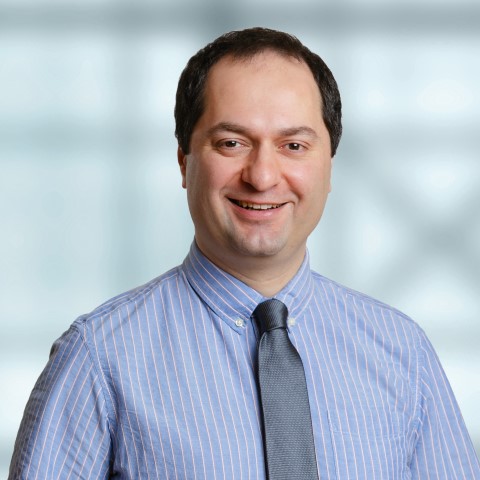
Dr. Taati is a Senior Scientist at KITE and also serves as the Lead of the KITE Aging Team. He holds an Associate Professor (status only) appointment in the Department of Computer Science and the Institute of Biomedical Engineering at the University of Toronto.
- Associate Professor (status only), Department of Computer Science, University of Toronto
- Faculty Affiliate, Institute of Biomedical Engineering, University of Toronto
- Faculty Affiliate, Vector Institute, University of Toronto
- Faculty Member, Rehabilitation Sciences Institute, University of Toronto