Linking Mutations to Tumour Response
New study reveals why many cancers with mutations in the BRAF gene resist targeted therapies.
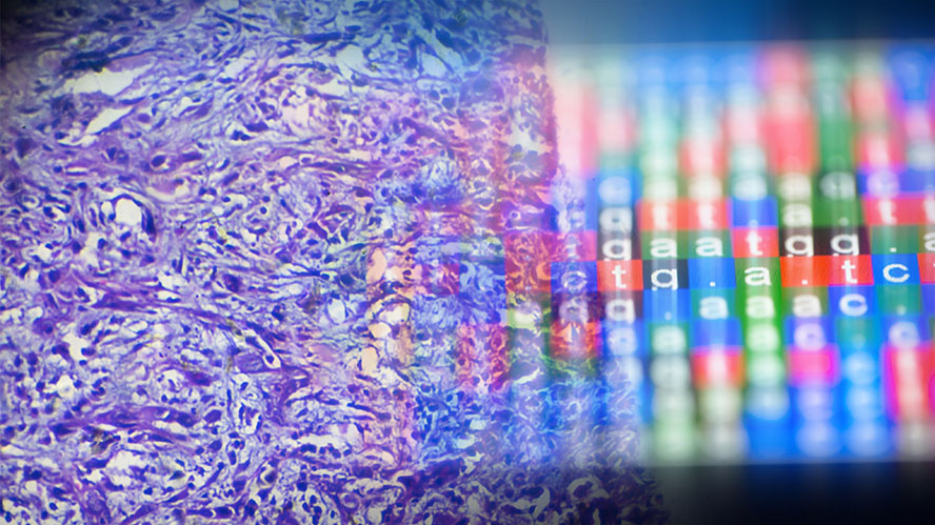
By sequencing tumours to pinpoint the exact mutation and the proteins affected, researchers can identify which signalling pathways are altered and develop drugs that precisely target these proteins. Some cancers have BRAF mutations that can be treated with targeted drugs, but about a third of mutations currently have no effective targeted treatments.
New results from a clinical trial at UHN’s Princess Margaret Cancer Centre shed light on why some targeted cancer therapies are not effective for tumours with specific BRAF gene mutations.
The BRAF gene, which is mutated in many human cancers, encodes a protein that is important for the growth and division of cells. The BRAF protein sends signals to cells through a pathway called the MAPK/ERK pathway—a set of proteins that work together to control important cell behaviours like growth and survival.
Some types of BRAF mutations (class 1 mutations) can be targeted for cancer therapies, while others (class 2 and 3 mutations) have no current targeted therapies. Class 2 and 3 BRAF mutations account for 30% of all solid tumours with BRAF mutations.
Inhibiting the BRAF protein and a protein from the MAPK pathway—called MEK—at the same time is an effective treatment for most cancer types with class 1 BRAF mutations. Despite this, the approach has not previously been used for tumours with class 2 and 3 BRAF mutations. The research team, therefore, wanted to determine the efficacy of BRAF and MEK inhibitors in patients with this type of advanced cancer.
In a clinical trial evaluating the efficacy of Binimetinib (MEK inhibitor) and Encorafenib (BRAF inhibitor), the researchers found that these drugs had minimal efficacy against advanced tumours with class 2 or 3 BRAF mutations.
However, the team was still able to establish the safety of this therapeutic regimen and decided to dig deeper in order to understand why the response to these drugs was weak.
By analyzing genetic data from patient tumours, patient-derived tumour models, and other sources, the team discovered several mechanisms that are used by tumours with class 2 and 3 BRAF mutations to resist treatments targeting BRAF and MEK. These mechanisms include the development of new mutations that enable the MAPK signalling pathway to be reactivated and drive tumour growth, and new mutations that drive tumour growth independently of MAPK signalling.
Two other drivers of drug resistance stood out: CDK4/6 and SHP2—proteins that regulate cell growth even when BRAF and MEK are inhibited. Importantly, the researchers found that adding CDK4/6 or SHP2 inhibitors to BRAF/MEK therapy made cancer models more responsive.
The study suggests that simply blocking BRAF and MEK is insufficient to treat most cancers with class 2 and 3 BRAF mutation but targeting a broader range of proteins could overcome tumour resistance and make these treatments more effective. These findings open the door to future combination treatments that could finally offer targeted options for patients with these rare mutations.
Dr. April Rose is first and co-corresponding author of the study. She is a clinician-scientist and Assistant Professor in the Department of Oncology at McGill University.
Dr. Anna Spreafico is the co-corresponding author of the study. She is a Clinician Investigator at Princess Margaret Cancer Centre and an Associate Professor in the Department of Medicine at the University of Toronto.
The BEAVER clinical trial was sponsored by the Cancer Genomics Program of the Princess Margaret Cancer Centre. This investigator-initiated trial was supported by Pfizer. Exploratory objectives and preclinical experiments were funded by the Conquer Cancer Foundation, Canadian Cancer Society, Canadian Institutes of Health Research, TransMedTech Institute, the Government of Canada, the Jewish General Hospital Foundation, the Canada Foundation for Innovation, the Province of Quebec, and The Princess Margaret Cancer Foundation.
Dr. Rose has provided consultation for Advanced Accelerator Applications/Novartis, EMD Serrono, Merck, and Pfizer. Dr. Rose reports research funding from AstraZeneca (Inst), Novartis (Inst), Merck (Inst), Seattle Genetics (Inst), Pfizer (Inst), and Essa Pharma (Inst). Dr. Spreafico reported a consulting advisory role with Merck, Bristol-Myers Squibb, and Alents and grant/ research funding from Novartis, Bristol-Myers Squibb, Symphogen, AstraZeneca/Medimmune, Merck, Bayer, Surface Oncology, Northern Biologics, Janssen Oncology/Johnson & Johnson, Roche, Regeneron, Alkermes, Array Biopharma/Pfizer, GSK, NuBiyota, Oncorus, Treadwell, Amgen, ALX Oncology, Nubiyota, Genentech, Seagen, Servier, Incyte, and Alentis.
For a full list of competing interests, see the manuscript.
Rose AAN, Maxwell J, Rousselle E, Mukonoweshuro CL, Elkholi IE, Riaud M, Biondini M, Cianfarano E, Soria-Bretones I, Tobin C, McGuire M, Law RWY, Elia AJ, Wang BX, King I, Zhang T, Pugh TJ, Kamil ZS, Butler M, Shepherd FA, Leighl NB, Razak AA, Hansen A, Saibil SD, Bedard PL, Siegel PM, Siu LL, Cescon DW, Spreafico A. Binimetinib and encorafenib for the treatment of advanced solid tumors with non-V600E BRAF mutations: results from the Phase II BEAVER trial. Nat Commun. 2026 Jan 3;17(1):1323. doi: 10.1038/s41467-025-68076-7.