Unlocking Therapeutic Potential
Researchers establish new AI tool to identify specific cancer-responsive T cell receptors.
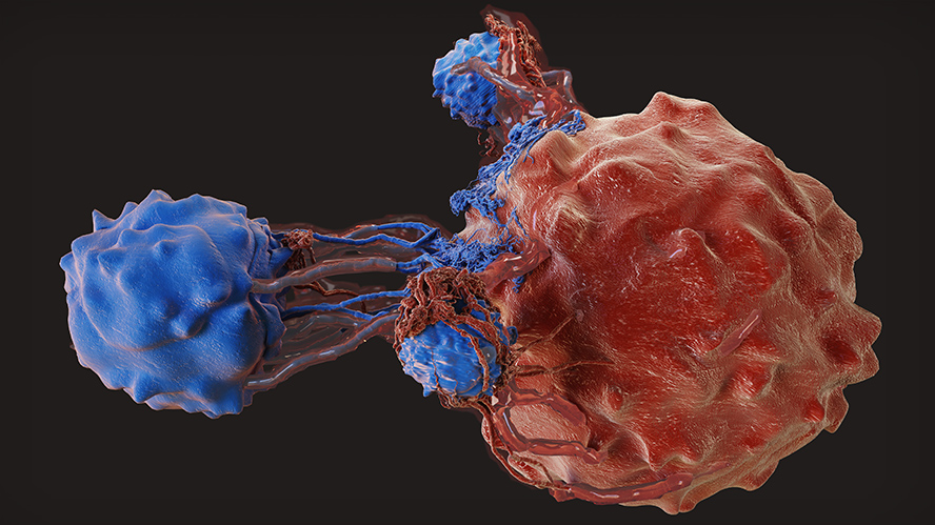
T cells are an important part of the immune system's defence against multiple myeloma and other cancers. Among them, a group called gamma delta (γδ) T cells is emerging as a key player in cancer treatment.
In a new study published in Nature, researchers from UHN’s Princess Margaret Cancer Centre have developed a machine-learning algorithm, called PreGame, capable of detecting specialized immune cells that can react to and help fight tumours.
T cells, a type of white blood cell, help the immune system detect and destroy cancer cells, including those involved in multiple myeloma and other cancers. A specialized T cell, called a gamma delta (γδ) T cell, is gaining attention for its important role in the response to certain cancer therapies such as immune checkpoint blockade (ICB)—a type of immunotherapy that enables T cells to kill cancer cells.
This anti-tumour response is an important aspect of immune-based cancer therapies. However, finding the rare immune cells that can naturally recognize cancer has been a major barrier to developing T cell-based therapies.
Using single-cell sequencing data, the team, led by Drs. Tak Mak and Suzanne Trudel at UHN’s Princess Margaret Cancer Centre, created PreGame, the first machine learning-based approach to distinguish tumour-reactive γδ T cells from non-reactive ones (bystanders). Using PreGame, the team identified these cells from patients with multiple myeloma or other solid tumours.
They showed that γδ T cells flagged by PreGame have associated tumour-responsive receptors (TCRs) and that their anti-tumour activity is dependent on these TCRs. These specific, tumour-reactive γδ T-cell receptors can directly recognize and target specific protein markers on tumour cells.
"What makes γδ T-cell receptors so exciting is their potential to work across many different patients and cancer types," says Dr. Michael St. Paul, co-first author of the study. "Unlike conventional T-cell therapies, which only work for certain people based on specific protein markers, the tumour-reactive receptors we discovered recognize cancer cells in a different way. Using PreGame, we can rapidly identify these receptors and help develop a new class of immunotherapies that could overcome the limitations of existing T-cell therapies and benefit more patients.”
The team also found that tumour-reactive γδ T cells were strongly linked to positive responses to BPd (belantamab mafodotin, pomalidomide and dexamethasone). BPd is a three-drug combination treatment that mixes targeted therapy with immune-activating drugs, clinically used for relapsed and refractory multiple myeloma when previous lines of treatment have failed. Without tumour-reactive γδ T cells, patients had worse progression-free survival.
“Tumour-reactive γδ T cells appear to be critical for long, durable responses to BPd therapy. Now we have a tool that can pre-emptively predict patient response. This will help us to rapidly identify and translate those best-performing γδ T cell receptors into novel therapeutics,” says Dr. Liam Hendrikse, co-first author of the study.
Dr. Michael St. Paul, Postdoctoral Researcher at UHN’s Princess Margaret Cancer Centre, is the co-first author of the study.
Dr. Liam Hendrikse, Postdoctoral Researcher at UHN’s Princess Margaret Cancer Centre, is the co-first author of the study.
Dr. Tak Mak is a Senior Scientist at UHN’s Princess Margaret Cancer Centre and a Professor in the Department of Medical Biophysics and Immunology. He is the co-senior author of the study.
Dr. Suzanne Trudel, PM Clinician Scientist at UHN’s Princess Margaret Cancer Centre and Associate Professor in the Department of Medical Biophysics at the University of Toronto, is the co-senior author of the study.
This work was supported by the Paula and Rodger Riney Foundation, the Canadian Institutes of Health Research, the Cancer Research Institute, GlaxoSmithKline, the Canada Foundation for Innovation, the Ontario Ministry of Research and Innovation, the Gattuso-Slaight Personalized Cancer Medicine Fund, the WPK Immunotherapy Fund, Blood Cancer United (formerly The Leukemia & Lymphoma Society), and The Princess Margaret Cancer Foundation.
Dr. St. Paul, Dr. Hendrikse, Dr. Snow, Dr. Luo, and Dr. Mak have filed a provisional patent related to the use of PreGame and PreGame markers to identify TR γδ T cells. Dr. Mak reports consulting relationships with Treadwell Therapeutics, AstraZeneca, and Agios Pharmaceuticals and is a cofounder of, and holds equity in, Treadwell Therapeutics and TCRyption; however, this work was conducted independently and is unrelated to his roles in these companies. Dr. Trudel discloses consultancy (GSK), research funding (BMS, Genentech, GSK, Janssen, K36 Therapeutics, Pfizer, Roche), honoraria (AstraZeneca, GSK, Janssen) and advisory committees (AstraZeneca, BMS, GSK, Janssen, Kite/Arcellx, Pfizer, Roche, Sanofi).