New Molecular Clues to Artery Health
Study finds that maintaining endothelial cell identity protects arteries from plaque buildup.
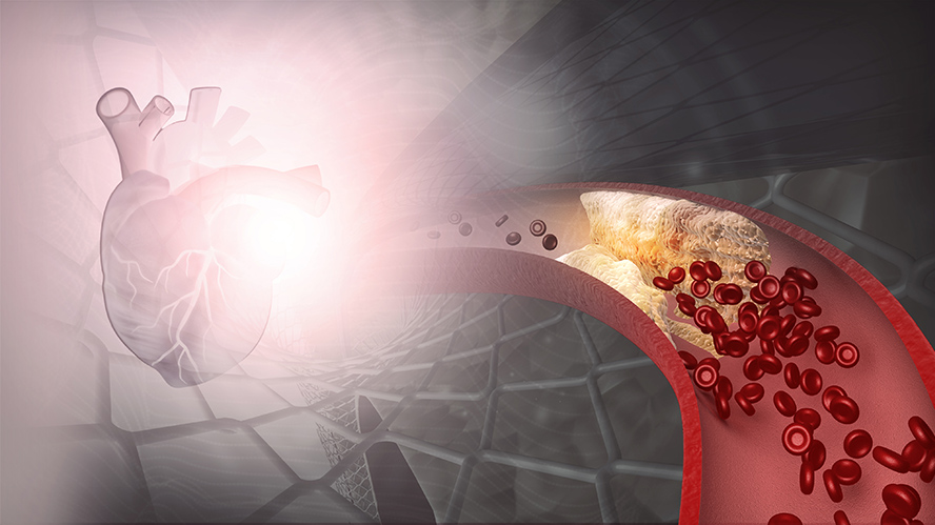
Endothelial cells that line arteries help protect against plaque buildup. Over time, factors such as improper blood flow and cholesterol accumulation can damage these cells, causing them to change in ways that contribute to atherosclerosis.
Atherosclerosis, a narrowing of the arteries caused by plaque buildup, can lead to stroke and heart attack. In a new study published in Nature Communications, researchers at UHN’s Peter Munk Cardiac Centre (PMCC) show that the protein ERG (ETS-related gene), which regulates gene activity, helps protect blood vessel cells, called endothelial cells, from changing their identity to a highly migratory cell type that can promote atherosclerosis.
The plaques that cause atherosclerosis are made up of cholesterol and inflammatory cells. Endothelial cells, the thin layer of cells that line the inside of blood vessels, perform many functions that guard against plaque buildup. Lining the 96,000 kilometers of blood vessels in the human body, endothelial cells have a vital role to play in preventing cardiovascular disease.
In parts prone to plaque buildip, this endothelial cell lining becomes damaged, allowing fats and immune cells to accumulate and form the artery-clogging plaques. At the cellular level, endothelial cells undergo a transition where they lose their typical identity and adopt features of migratory cells, called mesenchymal cells. This identity change is called the endothelial-to-mesenchymal transition (EndMT). Although this cell transformation has been linked to atherosclerosis, scientists still do not fully understand how it contributes to blood vessel damage and plaque buildup.
The protein ERG is a key regulator of endothelial cell function by controlling the expression of genes that define their identity, reducing inflammation, and supporting the growth of new blood vessels. Previous studies have linked ERG with EndMT. However, the role of ERG in atherosclerosis has yet to be examined.
Researchers at PMCC investigated the role of ERG using laboratory models of atherosclerosis in which ERG expression was removed from endothelial cells. They found that without ERG, there was a signficiant increase in plaque buildup in these lab models with high cholesterol.
Without ERG, endothelial cells began to lose their normal characteristics and transformed into mesenchymal cells through EndMT. These altered cells migrated into plaques and expanded to promote artery disease.
The loss of ERG also weakened the connections between endothelial cells, which serve as important barrier between the blood and tissues, enabling more cholesterol and fat to enter the arteries. This led to an increase in the accumulation of cholesterol-containing cells in areas normally resistant to plaque formation.
These findings were supported by analyses of human plaque samples, where ERG expression was reduced in cells that appeared to be migrating into plaques, suggesting that loss of ERG may be an early change in a disease process develops over decades. Additionally, restoring ERG in endothelial cells reversed many of the harmful changes and helped the cells regain their normal endothelial identity.
The researchers conclude that ERG acts as a key regulator of blood vessel health. By preventing endothelial cells from losing identity and undergoing EndMT, ERG may help slow or limit the development of atherosclerosis, raising the possibility of future therapeutic approaches.
Dr. Steven R. Botts is an MD PhD student at the University of Toronto and completed this work while a Physician-Scientist Trainee at UHN. He is the first author of the study.
Dr. Kathryn Howe, Scientist at UHN’s Peter Munk Cardiac Centre and Associate Professor, Department of Surgery, University of Toronto, is the co-senior author of this study.
Dr. Jason Fish, Senior Scientist at UHN’s Peter Munk Cardiac Centre and Professor, Department of Laboratory Medicine & Pathobiology, University of Toronto, is the co-senior author of the study.
See www.howeandfishlabs.com for more information about this laboratory.
Medicine by Design, which received funding from the Canada First Research Excellence Fund, the Canadian Institutes of Health Research, the National Institutes of Health, the Ontario Graduate Scholarship Program, the Heart and Stroke Foundation of Canada, the University of Toronto, the Canada Foundation for Innovation, the Foundation to Advance Vascular Cures, the Chan Zuckerberg Initiative, and UHN Foundation.
Botts SR, Scipione CA, Schulz K, Breda LCD, Ellis K, Ho C, Raju S, Prajapati K, Yu K, Khan AB, Polenz CK, Prattas SZ, Hyduk SJ, Cao C, Wythe JD, Robbins CS, Miller CL, Cybulsky MI, Fish JE, Howe KL. ERG preserves endothelial identity to limit atherosclerosis. Nat Commun. 2026 Jul 13;17(1):8615. doi: 10.1038/s41467-026-75287-z.