Improving Gene Editing Efficiency
New AI method can predict the performance of CRISPR gene editing tools.
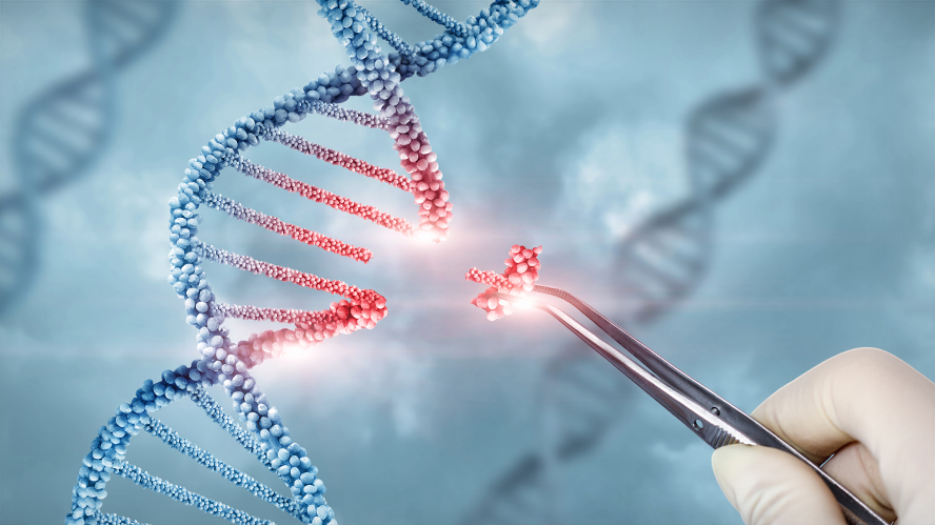
CRISPR-Cas9 is a gene-editing tool that enables scientists to modify DNA. The system works by using a short piece of RNA to acts as the guide, directing the Cas9 enzyme to a specific spot where it can cut the DNA.
A study from UHN’s Princess Margaret Cancer Centre (PM) introduces a new AI model that can help scientists design more efficient gene editing tools.
Gene editing enables scientists to make targeted changes to DNA in living cells. These approaches are widely used in biomedical research and have potential applications in treating disease, including correcting disease-causing mutations, identifying potential drug targets, and investigating gene function.
The CRISPR-Cas 9 system is one of the most widely used gene editing tools and uses a short piece of RNA, known as single-guide RNA (sgRNA), to direct the Cas9 protein to a specific location in the genome, where it can cut DNA. However, not all sgRNAs perform equally well, and predicting which guides will be most effective remains a challenge.
As the sequence of the sgRNA affects its gene editing performance, careful guide design is essential. Several AI models have been developed to help predict which RNA sequences will work best. However, these programs often function as "black boxes”, providing little information about how the models work. They also often overlook how the position of patterns within sgRNA sequences influences their effects on Cas9.
To address this problem, the team, co-led by Dr. Sushant Kumar, Scientist at PM, and collaborators developed DeepCC9, a new machine learning framework designed to be both accurate and interpretable. The model identifies position-based sequence patterns for sgRNAs that affect gene editing efficiency. DeepCC9 enables users to learn what sequence features drive this predictive performance.
When tested using datasets for different Cas9 variants, DeepCC9 outperformed existing approaches in predicting how well gene editing would perform. In addition, the researchers identified 74 informative features of sgRNA sequences associated with the prediction of Cas9 genome-editing efficiency. They also found that the position of these features within an sgRNA can significantly affect how well Cas9 binds to and cuts DNA.
These findings provide a clearer picture of the sequence features that contribute to successful gene editing and could help scientists design more effective sgRNAs for research and biotechnology applications. DeepCC9 may help accelerate discoveries in genome engineering and other areas of molecular biology.
Nasim Bakhtiyari, doctoral candidate at Tabriz University of Medical Sciences, is the first author of the study.
Dr. Yosef Masoudi-Sobhanzadeh, from the Department of Computer Engineering, Istanbul Rumeli University and the Department of Molecular Medicine, Faculty of Advanced Medical Sciences, Tabriz University of Medical Sciences, is a co-corresponding author of the study. He was a Postdoctoral Researcher at UHN’s Princess Margaret Cancer Centre at the time of this study.
Dr. Safar Farajnia, Professor of Biotechnology, Drug Applied Research Center & Biotechnology Research center, Tabriz University of Medical Sciences, is a co-corresponding author of the study.
Dr. Sushant Kumar, Scientist at UHN’s Princess Margaret Cancer Centre and Assistant Professor in the Department of Medical Biophysics at the University of Toronto, is the co-corresponding author of the study.
This work was supported by the Princess Margaret Cancer Foundation, the Terry Fox Research Institute, the Drug Applied Research Center, and Tabriz University of Medical Sciences.
Dr. Sushant Kumar is a Tier 2 Canada Research Chair in Genomic Medicine.
Bakhtiyari N, Masoudi-Sobhanzadeh Y, Farajnia S, Kumar S. An interpretable deep learning framework uncovers features governing CRISPR-Cas9 genome-editing efficiency. Bioinformatics. 2026 Jul 2;42(7):btag483. doi: 10.1093/bioinformatics/btag483.