Understanding Advanced Breast Cancer
Study shows blood-based DNA analysis can classify and characterize advanced breast cancer.
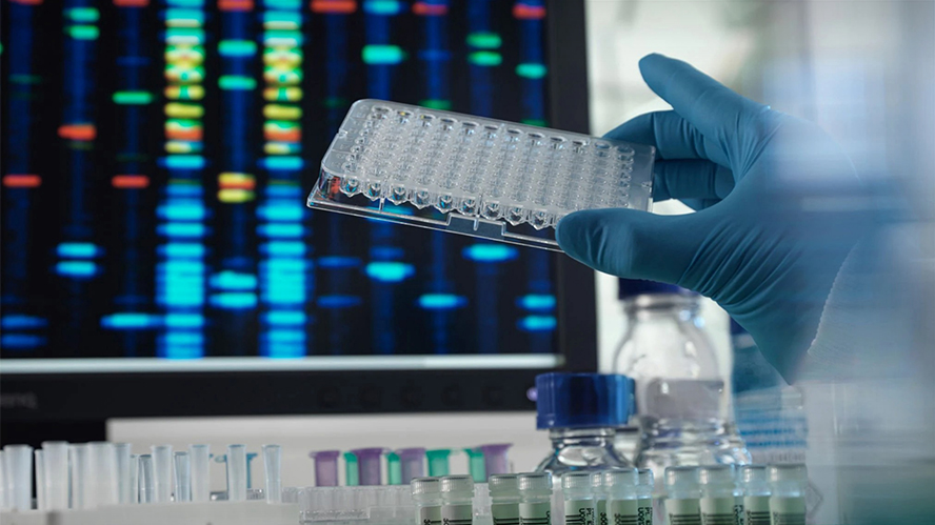
Patterns of DNA methylation—chemical markers on DNA that regulate its expression—are tissue- and cancer-site-specific. This information can be obtained by analyzing fragments of cell-free DNA circulating in the bloodstream.
Researchers from UHN’s Princess Margaret Cancer Centre (PM) have developed a new approach for blood-based testing that could lead to new ways to detect and classify metastatic breast cancer—breast cancer that has spread to other tissues and organs—without the need for invasive tissue biopsies.
Breast cancer is the most diagnosed cancer in women worldwide and is a leading cause of cancer-related mortality. Treatment decisions are typically based on the results of tissue biopsies that determine characteristics of the tumour, such as whether it is sensitive to female hormones (estrogen) or the presence of the protein human epidermal growth factor receptor 2 (HER2) in tumour cells.
However, tissue biopsies are invasive procedures and, depending on the tumour location, are not always possible. In addition, samples may not accurately reflect the differences that can exist between multiple tumours in different parts of the body or how the cancer changes over time.
There is a need for less invasive ways to evaluate breast cancer that can also assess how it changes over time. One promising approach, known as a liquid biopsy, uses a blood sample instead of tumour tissue. By analyzing tiny pieces of tumour DNA that circulate in the bloodstream (circulating tumour DNA, “ctDNA”), liquid biopsies could give doctors a more complete picture of the cancer throughout the body and help guide treatment decisions over the course of a patient's disease.
Liquid biopsy tests that analyze ctDNA have been adopted in many settings to characterize tumour mutations. However, they are not yet widely used to provide information about other tumour features. Functional liquid biopsies, which aim to capture the dynamic states of cancer cells, represent a major area of ongoing research.
To build this type of functional liquid biopsy test, the research team led by Dr. David Cescon, PM Clinician Scientist, evaluated breast cancer-related patterns in ctDNA. They analyzed blood samples from 79 patients with various forms of metastatic breast cancer, as well as a large public dataset of specific DNA modifications called methylation. Methylation is when a small chemical group, called a methyl group, is added to DNA, impacting whether genes are turned "on" or "off".
Integrating patient samples and the public dataset, the researchers looked for patterns of DNA methylation to identify a signature strongly linked to different forms of breast cancer. They then looked at whether the signature could be detected in blood samples using a specialized technique to analyze methylation patterns in cell-free DNA. Following testing and validation across several groups, the signatures could reliably be used to detect breast cancer, distinguish it from other types of cancer, and determine whether tumours were estrogen-responsive or not—known as estrogen receptor positive or negative, respectively.
Overall, the findings suggest that blood-based DNA analysis may provide clinically useful information through a less invasive approach to monitor metastatic breast cancer. This work complements an ongoing breast cancer liquid biopsy research program led by Dr. Cescon’s group at PM. The program aims to develop and evaluate new approaches that use blood samples to better understand the current state of a person’s cancer, potentially enabling more effective and individualized treatment.
Dr. Sasha Main is a former doctoral student at UHN’s Princess Margaret Cancer Centre and co-first author of the study.
Mitchell Elliott is a doctoral student at UHN’s Princess Margaret Cancer Centre and co-first author of the study.
Althaf Singhawansa is a Research Technician at UHN’s Princess Margaret Cancer Centre and co-first author of the study.
Dr. David Cescon is a PM Clinician Scientist at UHN’s Princess Margaret Cancer centre and an Associate Professor in the Department of Medicine at the University of Toronto. He is the corresponding author of the study.
This work was supported by the Canadian Cancer Society, the Canadian Institutes of Health Research, the Ontario Institute for Cancer Research, the Hold’em for Life Fellowship Program, the Canadian Association of Medical Oncology, Komen Foundation, ASCO Conquer Cancer Foundation, Breast Cancer Research Foundation, the Canadian Epigenetics, Environment and Health Research Consortium, and The Princess Margaret Cancer Foundation.
Mitchell Elliott reports personal fees from Roche, Gilead, and Knight Therapeutics outside the submitted work. Dr. David Cescon reports personal fees from AstraZeneca, Daiichi Sankyo, Exact Sciences, GenomeRx, Gilead, GlaxoSmithKline, Inivata/NeoGenomics, Knight Therapeutics, Lilly, Merck, Novartis, Pfizer, Roche, and SAGA and grants, nonfinancial support, and other support from AstraZeneca, GenomeRx, Guardant Health, Grail, Gilead, GlaxoSmithKline, Inivata/NeoGenomics, Knight, Merck, Pear Bio, Pfizer, ProteinQure, RayzeBio, and Roche all outside the submitted work, as well as a patent for methods pending.
For a full list of competing interests, see the manuscript.
Main SC, Elliott MJ, Singhawansa A, Zou J, Zeng Y, Cheng N, Yu C, Hilton JF, Awadalla P, He HH, Bedard PL, Lupien M, Bratman SV, Cescon DW. Circulating cell-free DNA methylation profiling enables detection, distinction, and estrogen receptor status classification of advanced breast cancer. Cancer Res. 2026 Jun 20; OF1-OF16. doi:10.1158/0008-5472.CAN-26-0076.