Brain Stimulation to Treat OCD
Large-scale UHN-led study finds brain stimulation treatments may help people with severe OCD.
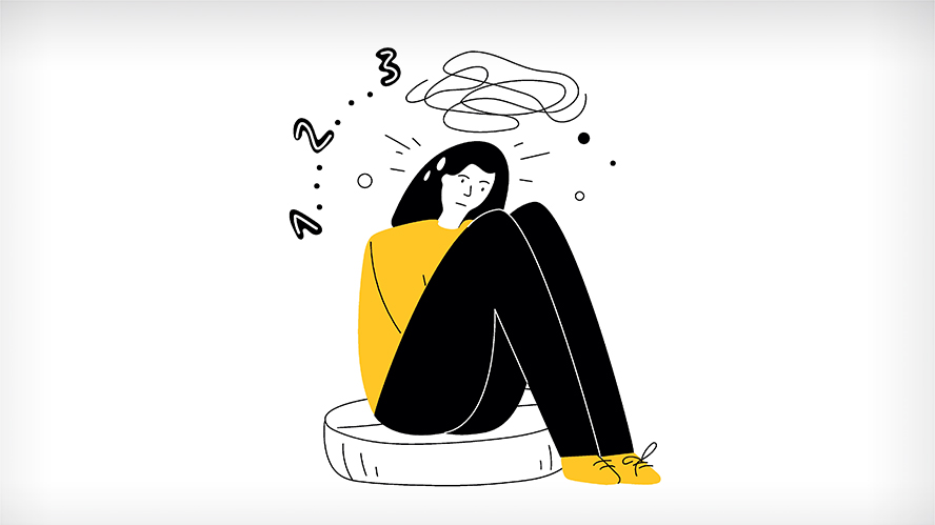
Obsessive compulsive disorder (OCD) affects 2–3% of people globally, yet is one of the leading causes of disability from mental health conditions. The need for new treatments is critical, particularly for those with severe manifestations of the disorder.
A new study from UHN’s Krembil Brain Institute (KBI) suggests that brain stimulation treatments, also called neuromodulation, may offer new hope for individuals living with severe obsessive-compulsive disorder (OCD). The findings of this meta-analysis, which combines results from many studies, suggest brain stimulation may help people better manage symptoms and improve quality of life.
OCD is a mental health condition characterized by intrusive, distressing thoughts (obsessions) and repetitive behaviours (compulsions) performed to reduce anxiety. These symptoms can take a serious toll and impair daily life. For 30–40% of patients, standard treatments fail to provide relief, and some do not respond even to additional medications used when first-line treatments do not work. This severe form of treatment resistance is known as treatment-refractory OCD.
As researchers learn more about how different parts of the brain communicate in OCD, new treatments have emerged that aim to treat the brain networks directly. These therapies, called neuromodulation, use controlled electrical or magnetic stimulation to adjust activity in specific areas of the brain. Until now, no study has comprehensively compared different brain-stimulating approaches, limiting understanding of which option is most effective.
The KBI team analyzed 142 studies involving 2,960 patients across four approaches: deep-brain stimulation (DBS), lesion-based surgery, transcranial direct current stimulation (tDCS), and transcranial magnetic stimulation (TMS). DBS and lesion-based surgery are invasive, while tDCS and TMS are non-invasive.
Results showed that all techniques reduced OCD symptoms. While invasive approaches showed the strongest effects, non-invasive modalities still produced moderate improvements and may be a more accessible option for those with less severe symptoms. Researchers suggest invasive techniques perform better because they can more reliably and precisely target key communication areas deep in the brain, known as hubs.
"Our analysis points to the importance of considering how brain regions are connected when determining whether a region is an ideal candidate for neuromodulation, rather than its location alone," says KBI Assistant Scientist and senior author of the study, Dr. Jürgen Germann.
For people living with OCD for whom standard treatments have failed, this meta-analysis represents a step towards better symptom management and reduced disability as a result. The findings support the use of neuromodulation for severe OCD while also shedding light on the underlying brain circuitry and potential therapeutic targets. Future research that continues to focus on how brain networks function could help make brain stimulation treatments for OCD more precise and personalized.
Dr. Flavia Venetucci Gouveia, Scientist at The Hospital for Sick Children and Assistant Professor in the Department of Medical Biophysics at the University of Toronto, is the first author of this study.
Dr. Jürgen Germann, Assistant Scientist at UHN’s Krembil Brain Institute and Assistant Professor at the University of Toronto’s Institute of Biomedical Engineering, is the senior author of this study.
This work was supported by the Canadian Institutes of Health Research, Brain Canada Foundation, the Shireen and Edna Marcus Foundation, and UHN Foundation.
Dr. Andres Lozano is a co-founder of Functional Neuromodulation and a consultant for Boston Scientific, Medtronic and Abbott.
Gouveia FV, Elias GJB, Wong EHY, Yang A, Beyn M, Mesich A, Omere U, Iskin SA, Bai Y, Hu CK, Boutet A, Lozano AM, Germann J. Neuromodulation for treatment-resistant obsessive–compulsive disorder: a systematic review, meta-analysis and network analysis. Nat Mental Health. 2026 Apr 13. DOI: 10.1038/s44220-026-00586-9.