How the Body Remembers Inflammation
Researchers discover how repeated infections and stress can change blood stem cells over time.
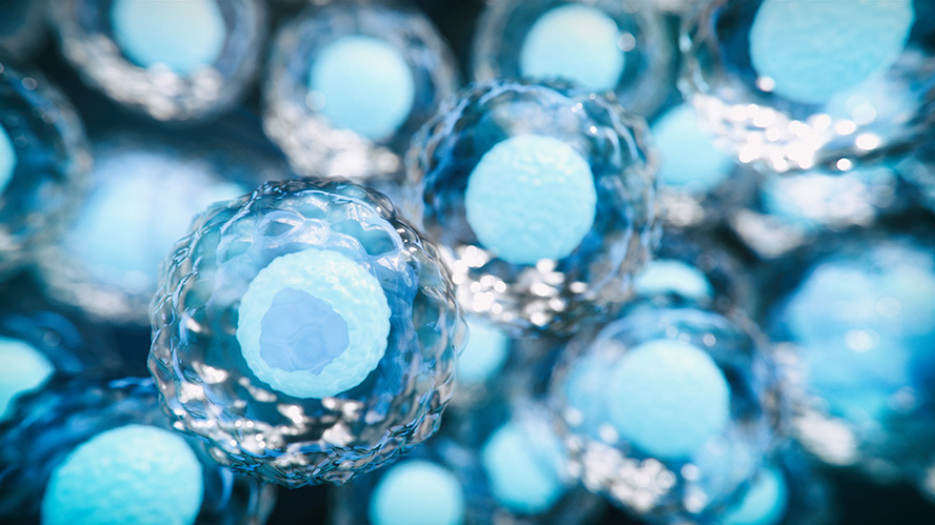
Newly identified blood stem cells, called HSC inflammatory memory (HSC-iM) cells, are distinct from other blood stem cells in that they develop changes at the molecular level in response to inflammation that are maintained long term.
Stress from inflammation over long periods of time can drive the aging of blood cells and raise the risk of cancer. In a new study published in Nature, researchers at UHN’s Princess Margaret Cancer Centre (PM) and the University of Oxford have identified human blood stem cells (hematopoietic stem cells, HSCs) that can remember prior inflammation—a finding that could impact what is known about aging and the long-term effects of inflammation.
Mature blood cells are continuously replenished by bone marrow hematopoietic stem and progenitor cells—rare, self-renewing cells that develop into all blood cell types. Inflammation, caused by infections and other stressors over time, can contribute to an age-related decline in HSCs.
It is not fully known how daily blood production is coordinated with the maintenance of blood stem cells over a lifespan, especially in response to repeated episodes of inflammation. To understand how HSCs adapt and respond to inflammation, the research team, led by senior authors Drs. Stephanie Xie and John Dick from PM and Dr. Paresh Vyas from the MRC Weatherall Institute of Molecular Medicine at the University of Oxford, generated specific lab models of inflammation to analyze human HSCs.
These models, called xenograft inflammation-recovery models, use human cells to study inflammation by exposing them to conditions that mimic inflammatory stress, such as those seen in sepsis or aging. These models are then analysed at the molecular and single-cell level.
The research team identified a distinct group of HSCs that differed at the level of how their genes work. These cells were termed HSC inflammatory memory cells (HSC-iM) as they could retain the memory of past inflammation. After exposure to inflammatory treatments, HSC-iM retained molecular changes that included long-lasting shifts in how the stem cells behaved and communicated. They also remained in a resting state and produced fewer blood cells than usual.
Indications of this inflammatory memory were also found in HSC samples from people recovering from COVID-19, individuals with sickle cell disease, older adults, and people with age-related blood cell changes—validating the results from the lab models.
Interestingly, in situations where HSCs were impacted by a condition caused by age-related genetic mutations, called clonal hematopoiesis, the impact of inflammatory stress was reduced. HSC-iM with these changes were more likely to be activated and divide to mature into working blood cells. In other words, these mutations made the memory cells behave differently.
The molecular differences observed in HSC-iM were also passed down to immune cells that these stem cells matured into, shaping how those cells behave and react to inflammation later on.
Additionally, people whose circulating blood cells showed more of these long-lasting inflammatory patterns had a higher overall risk of death, linking these stem cell changes to real-world health outcomes and helping explain why inflammation affects people differently across a lifetime.
“These findings help explain why inflammatory experiences earlier in life may shape a person’s health decades later,” says Dr. Stephanie Xie, Scientist at UHN’s Princess Margaret Cancer Centre and corresponding author of the study. “It provides us with more tools to investigate how health outcomes due to aging and age-associated diseases can differ between individuals.”
Dr. Andy Zeng is the co-first author of the study and an MD/PhD candidate at UHN and the Temerty Faculty of Medicine at the University of Toronto.
Dr. Murtaza Nagree is the co-first author of the study and a Postdoctoral Researcher at UHN.
Dr. Niels Asger Jakobsen is the co-first author of the study and a Postdoctoral Research Scientist at the University of Oxford.
Dr. Paresh Vyas is the co-senior author of the study. He is a Professor of Haematology at the University of Oxford.
Dr. John Dick is the co-senior author of the study. He is a Senior Scientist at UHN’s Princess Margaret Cancer Centre, the Helga and Antonio De Gasperis Chair in Blood Cancer Stem Cell Research, a Professor in the Department of Molecular Genetics at the Temerty Faculty of Medicine at the University of Toronto, and University Professor, University of Toronto.
Dr. Stephanie Xie is the co-senior and corresponding author of the study. She is a Scientist at UHN’s Princess Margaret Cancer Centre and an Assistant Professor in the Department of Medical Biophysics at the Temerty Faculty of Medicine at University of Toronto.
This work was supported by the University of Toronto, the Medical Research Council, Leukaemia UK, Blood Cancer UK, the Government of Ontario, the International Development Research Centre, the Government of Canada, the Terry Fox Research Institute, Blood Cancer United, the Canadian Institutes for Health Research, the Canadian Cancer Society, the Medical Research Council (MRC) Molecular Haematology Unit at the University of Oxford, the NIHR Oxford Biomedical Research Centre, the Allan Slaight Breakthrough Fund, and The Princess Margaret Cancer Foundation.
Dr. John Dick receives royalties from Trillium Therapeutics Inc./Pfizer.
Zeng AGX, Nagree MS, Jakobsen NA, Shah S, Varesi A, Kang JRW, Murison A, Cheong JG, Turkalj S, Zhang X, Radtke FA, Abera TA, Lim INX, Jin L, Araújo J, Aguilar-Navarro AG, Parris D, McLeod J, Kim H, Lee HS, Zhang L, Boulanger M, Bader E, Gbeha E, Parkhurst CN, Wagenblast E, Flores-Figueroa E, Wang B, Schwartz GW, Shultz LD, Nam AS, Grimes HL, Josefowicz SZ, Awadalla P, Vyas P, Dick JE, Xie SZ. Human haematopoietic stem cells remember inflammatory stress. Nature. 2026 May 27; doi:10.1038/s41586-026-10522-7.