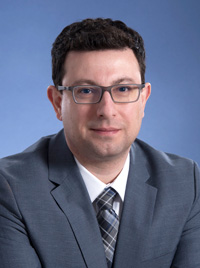
Dr. Touma is a Rheumatologist and Clinical Epidemiologist whose research is focused on patients with systemic lupus erythematosus (SLE) and measurement science with a particular interest in the assessment of disease activity, patient reported outcomes and cognitive function. Dr. Touma has developed SLE disease activity indices: the SLEDAI Responder Index-50 and the SLEDAI-2K Glucocorticoids Index. Dr. Touma has established the NeuroLupus Program which is a team of experts in psychometrics, neuropsychology, neurology, psychiatry, measurement and bioinformatics with the goal of developing improved methods of identifying cognitive impairment in SLE and understanding its course over time and impact on health-related quality of life and productivity. Dr. Touma is a member of the American College of Rheumatology (ACR) committee for development of classification and response criteria for rheumatic diseases and the ACR methodologist on an ACR/EULAR funded project to develop response criteria for trials in giant cell arteritis. He leads the Outcome Measures in Rheumatology (OMERACT) working group to update core set domains for SLE clinical trials. Dr. Touma’s work has been supported by grants from the Canadian Institutes of Health Research, Arthritis Society of Canada, Lupus Canada and Physician Services Incorporated and Lupus Research Alliance. He is the recipient of an Early Researcher Award from the Government of Ontario.
ASTER: Anifrolumab Study for Treatment Effectiveness in the Real World
Study Status: active
Institute: Krembil Research Institute
Study Purpose: Anifrolumab is a treatment approved for adults with moderate to severe lupus. While clinical trials have shown that anifrolumab can improve lupus symptoms and reduce disease flare-ups, more information is needed about how well it works in everyday clinical practice.
This study will examine how well anifrolumab works for people with lupus who receive it as part of their care. Researchers will look at changes in lupus disease activity over time and determine how many patients achieve low disease activity. The study will also assess lupus flares, quality of life, fatigue, pain, medication use, and important side effects and health problems.
Background: Lupus is a complex disease that can affect many parts of the body, including the skin, joints, kidneys, and nervous system. Current treatment goals are to control symptoms, prevent organ damage, improve quality of life, and reduce side effects related to treatment.
Because it is uncommon for lupus symptoms to disappear completely, an important goal of treatment is to reduce symptoms and keep the disease under control. Long-term use of some treatments can lead to additional health problems. This highlights the need for more effective therapies with fewer side effects.
Studies have shown that anifrolumab can help reduce lupus symptoms, reduce how often symptoms get worse, and help people lower their use of steroid medicines such as corticosteroids. However, there is still limited information about how well anifrolumab works and how safe it is when used in everyday medical care. This study will help researchers learn more about its effectiveness and safety in real-world settings.
Study Methods: ASTER is an international study that will include approximately 500 adults with lupus who are starting anifrolumab treatment. Participants will be followed for up to three years.
Researchers will collect information from medical records, doctor's assessments, and patient questionnaires completed electronically. They will monitor disease activity, flares, organ damage, quality of life, fatigue, pain, healthcare use, and how participants use their medication over time. Some sites will also look at lupus-related skin symptoms. The study will look at care that participants are already receiving, and will not require participants to receive any treatment beyond what their healthcare provider prescribes.
Health Conditions:
Rheumatology
- Assistant Professor, Institute of Health Policy, Management and Evaluation, University of Toronto
- Associate Professor, Division of Rheumatology, Department of Medicine, University of Toronto