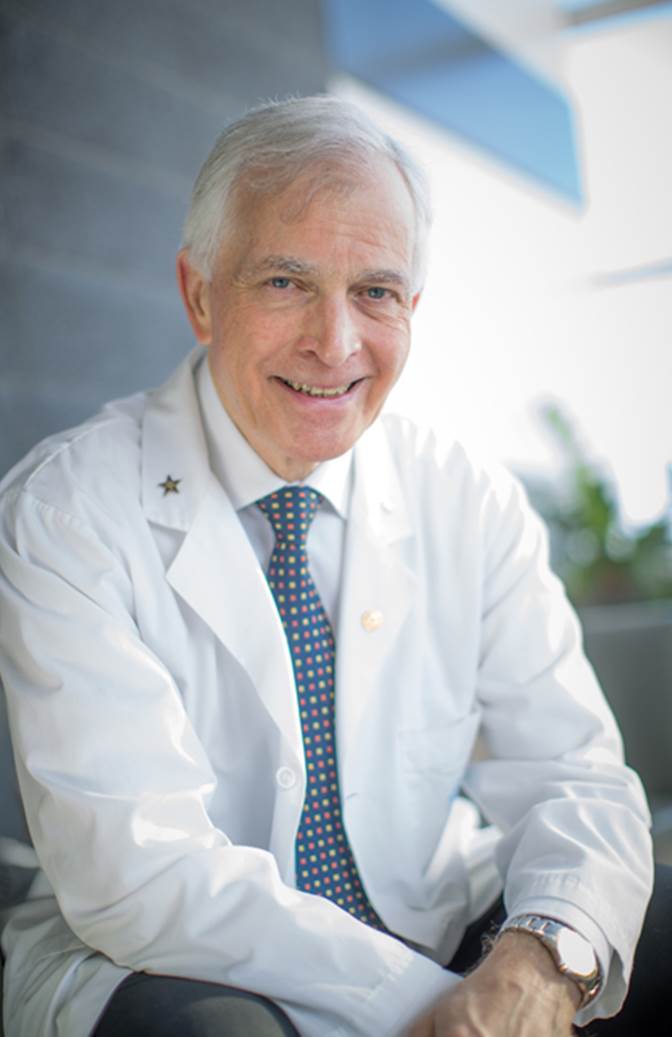
Dr. Lang has been involved in research related to Parkinson disease and other movement disorders for over 40 years. A great deal of his research involves the study of multiple facets of Parkinson disease and related movement disorders with particular focus on attempting to define disease etiology and pathogenesis, better establish natural history and more definitive diagnostic assessments, and develop effective disease-modifying and symptomatic therapies. In recent years, he has been involved in efforts to redefine Parkinson disease acknowledging the prolonged prodromal period. He has collaborated in formal calls to the field emphasizing the need to redefine the disorder and he has actively participated in the International Parkinson and Movement Disorder Society’s efforts to create new diagnostic criteria for Parkinson disease as well as to propose research criteria for prodromal disease. He has also been involved in the study of the 4-repeat tauopathies, Progressive Supranulear Palsy (PSP) and Corticobasal Degeneration (CBD). He was one of the senior authors developing diagnostic criteria for CBD and he has been a member of the MDS PSP Study Group that has published new proposed diagnostic criteria for PSP. Both of these efforts acknowledged the phenotypic variability of these disorders and the need to be able to make early accurate clinical diagnoses so that patients can be enrolled in future disease-modifying therapeutic trials (e.g., with tau vaccines).
Eye Tracking as a Tool for Diagnosing and Monitoring Movement Disorders
Study Status: active
Institute: Krembil Research Institute
Study Purpose: This research is being done to learn whether changes in eye movements, blinking, and pupil size can help doctors identify different movement disorders. Researchers also want to understand how these conditions change over time.
In this study, researchers will measure how people’s eyes move, how often they blink, and how their pupils change while they watch videos. They will compare these eye patterns in people with different movement disorders. Some participants will be followed over time to see whether these eye measurements can help doctors diagnose these conditions and track how they progress.
Background: Parkinson’s disease and other similar movement disorders can be hard to diagnose, especially in the early stages. This is because there are no simple tests, and many of these conditions can have similar symptoms.
Researchers are studying whether eye movements, blinking, and changes in pupil size could help identify these disorders. Using special eye-tracking technology, they can measure these changes more accurately than a regular medical test. This technology may help doctors identify movement disorders earlier and monitor how they change over time.
In this study, researchers will record how people’s eyes move while they watch videos. They will use this information to find out whether eye measurements can improve the diagnosis and monitoring of movement disorders.
Study Methods: This study will examine how eye movements are related to different movement disorders.
There will be two groups of participants. The first group will take part in one study visit, and the second group will return for a follow-up visit once a year. During each visit, participants will watch videos while special equipment records their eye movements, blinking, and pupil size. They will also complete routine clinical assessments.
Researchers will use this information to find out whether eye measurements can help doctors diagnose movement disorders and monitor how these conditions change over time.
Health Conditions:
Eye Health, Neurology & Neurosurgery (Parkinson's, epilepsy, Alzheimer's, etc.)
Dr. Lang is a Professor at the University of Toronto where he holds the Jack Clark Chair for Parkinson’s Disease Research. He is the Director of the Edmond J. Safra Program in Parkinson’s Disease and the Morton and Gloria Shulman Movement Disorders Clinic and the and holds the Lily Safra Chair in Movement Disorders at the Toronto Western Hospital, University Health Network. He has published over 700 peer-reviewed papers and over 100 book chapters and is one of the most highly cited investigators in the field of Movement Disorders.
- Officer of the Order of Canada
- Lily Safra Chair in Movement Disorders, University Health Network
- Director, Edmond J. Safra Program in Parkinson's Disease, University Health Network & University of Toronto
- Jack Clark Chair for Parkinson’s Disease Research, University of Toronto
- Professor, Department of Medicine and Institute of Medical Science, University of Toronto