A New Class of RNA Therapies
RNA-based approach shows potential for treating genetic diseases like cystic fibrosis.
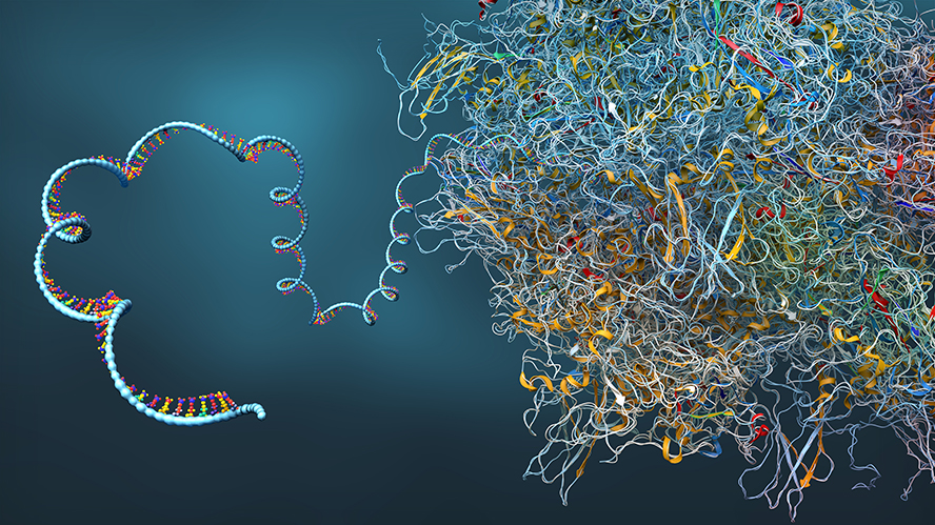
Approximately 11% of genetic disorders are caused by mutations that prematurely halt messages encoded in DNA. One such condition is cystic fibrosis, a genetic disorder that can result from mutations in the cystic fibrosis transmembrane conductance regulator (CFTR) gene. In a new study published in Science, researchers at UHN’s Princess Margaret Cancer Centre (PM) developed an RNA-based therapeutic strategy to treat diseases caused by these mutations and successfully corrected a premature CFTR stop mutation in laboratory models.
When DNA is copied into messenger RNA (mRNA), the mRNA is then used as a template to make proteins that carry out the body's functions. Some DNA mutations can create a premature ‘stop’ signal, causing the cell to stop producing a protein too soon, which can contribute to disease. This faulty ‘stop’ signal is called a premature termination codon (PTC).
Therapeutic approaches have been developed to overcome PTCs through engineered molecules known as suppressor transfer RNAs (sup-tRNAs), which can bypass these faulty stop signals and enable the production of full-length, functional proteins. However, engineering safe and effective sup-tRNAs, delivering them efficiently to target cells, and achieving sufficient activity in living cells remain major challenges.
To address these challenges, a team co-led by Dr. Bowen Li, Affiliate Scientist at PM, tested chemical modifications of sup-tRNAs. They identified a modification that increased sup-tRNA stability and efficiency, improved protein production, and reduced unwanted immune system responses.
The researchers also improved delivery of sup-tRNAs to cells by developing a lipid nanoparticle (LNP)—small, lipid-based delivery vehicles that safely carry genetic medicines into cells—specifically tailored to carry sup-tRNAs. Analysis revealed that these LNPs efficiently delivered sup-tRNAs to lung tissue via inhalation.
Cystic fibrosis is a hereditary condition that causes progressive lung damage. Approximately ten percent of patients have mutations that cause a premature ‘stop’ signal and cannot benefit from current therapeutics. The team tested their approach in cystic fibrosis laboratory models and patient-derived tissue samples carrying these mutations and successfully restored the CFTR protein function.
Researchers say the findings could pave the way for a new platform of genetic medicines capable of treating a wide range of diseases caused by mutations that lead to these premature stop signals.
To read about more work from Dr. Li’s team on improving genome editing therapies, see this recent Nature Biotechnology study. The researchers provide a new strategy for the non-viral delivery of large mRNA that has the potential to guide the design of future gene editing delivery systems, expanding their therapeutic reach.
Doctoral Candidate Jingan Chen and Postdoctoral Researchers Dr. Muye Zhou and Dr. Songtao Dong are co-first authors of the study in Dr. Bowen Li’s lab.
Dr. Bowen Li, Affiliate Scientist at UHN’s Princess Margaret Cancer Centre and Associate Professor at the Leslie Dan Faculty of Pharmacy at the University of Toronto, is a co-corresponding author of the study.
Dr. Haissi Cui, Assistant Professor in the Department of Chemistry at the University of Toronto, is a co-corresponding author of the study.
This work was supported by the Leslie Dan Faculty of Pharmacy, the Connaught Fund, the Canadian Institutes of Health Research, the Natural Sciences and Engineering Research Council of Canada, Cystic Fibrosis Canada, Harrington Discovery Institute, the National Institutes of Health, the Government of Canada, Cystic Fibrosis Foundation, PRiME, Next Generation Precision Medicine initiative, and The Princess Margaret Cancer Foundation.
Dr. Li is a Tier 2 Canada Research Chair in RNA Vaccines and Therapeutics and the GSK Chair in Pharmaceutics and Drug Delivery.
Jingan Chen, Dr. Haissi Cui, and Dr. Bowen Li are inventors on an invention disclosure that covers compositions, methods, and uses of the engineered/modified sup-tRNAs. Jingan Chen, Dr. Muye Zhou, Dr. Songtao Dong, and Dr. Bowen Li are inventors on an invention disclosure that covers the described ionizable lipids.