

Research at University Health Network
 
Technology Transfer
Menu Level 3  
   
 
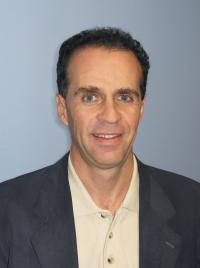
I Alex Vitkin, PhD

Senior Scientist
Ontario Cancer Institute (OCI)

Research Interests
Medical Applications of Lasers

My research is in the field of biophotonics and biomedical optics. We use optical and photonic technologies to address fundamental and applied biomedical problems such as early diagnosis and effective treatment of disease. Three specific research areas are outlined below.

  1. Optical coherence tomography. OCT is an emerging biomedical imaging technique with very high spatial resolution. It relies on the wave nature of the light and on the coherence properties of lasers to generate micron-scale cross sectional subsurface images of tissue. OCT is similar to ultrasound, except reflections of near-infrared light--not sound echoes--are used to produce a 2D or 3D image of tissue microstructure. It is also possible to detect motion within the imaged object by measuring the frequency/phase shift of the OCT interference fringes, thus generating flow-sensitive (Doppler) maps of micro-circulatory blood perfusion. These can then be superposed upon the structural OCT images.

    Clinically, several uses of this imaging method appear attractive; for example, a high-resolution, high-speed fiber-optic based OCT probe may assist a physician in early detection and classification of cancers during gastro-intestinal endoscopy. We are currently pursuing this application with clinical colleagues at St. Michael's Hospital in Toronto. OCT's ability to quantify blood flow dynamics in-vivo also opens up several exciting possibilities to study diseases and treatments with significant involvement of microcirculation; for example, we are quantifying the measured changes in blood flow during and following radiation and photodynamic therapies in an effort to understand tissue responses, derive appropriate dose metrics and optimize the delivery of these treatments. Outstanding biophysical issues in OCT include the origin of the tissue signal, correlation with standard histology, optimal signal processing and display methods, opto-electronic design of the OCT imager, use of contrast agents and novel contrast mechanisms (e.g., tissue optical birefringence), and OCT's ultimate spatial and flow resolution limit.


  2. Tissue polarimetry. Polarization properties of light are widely used in science, technology and industry for detailed examinations of materials (ellipsometry, nondestructive evaluation, remote sensing). However, uses of polarized light in biomedicine are severely compromised by tissue multiple scattering, which depolarizes the light. We are developing experimental and theoretical methods to enable tissue polarimetry by maximizing the detection of polarization-preserving photons, accounting for the effects of multiple scattering, and deriving intrinsic tissue polarization metrics (e.g., linear birefringence, circular birefringence, depolarization) from the measured polarimetric data. These methods are used to study the anisotropic (birefringent) nature of cardiac tissues, and its alterations following a heart attack and then following stem-cell-based regenerative treatments. In addition, the potential to detect small values of optical activity (circular birefringence) may offer a way to non-invasively quantify the concentration of optically active (chiral) tissue metabolites such as glucose. Non-invasive glucose monitoring in diabetic patients continues to be a major unsolved problem in clinical medicine, and our ability to extract small chiral asymmetries from the measured tissue polarization signals suggests a promising route towards a possible solution. Cancer applications are also possible in that pathologic tissue often exhibits an altered extracellular matrix microstructure that may have a distinct polarization signature. These and other applications will benefit from improved technologies and we are investigating experimental (polarization modulation with synchronous detection, imaging and spectroscopic extensions, faster data acquisition, tissue probe development) and theoretical (polarization-sensitive Monte Carlo simulation, polar decomposition of tissue Mueller matrix) refinements to our tissue polarimetry platform.


  3. Opto-thermal therapies/optical fiber sensors. Thermal therapies using laser, microwave, or ultrasound energy sources offer several potential advantages for the treatment of solid tumours (for example, in the brain or prostate). They are minimally invasive because they employ thin interstitial sources (optical fibers, microwave antennas, ultrasound applicators) to heat the target volume, obviating the need for extensive surgery. These therapies can preserve the underlying tissue architecture and the dividing line between thermally necrosed and viable tissue is sharp, making it possible to spare surrounding normal tissue if the treatment volume conforms to the 3D shape of the tumour. One important but poorly understood issue is the biophysics of thermal lesion formation. This requires extensive experimental measurements and three-dimensional modeling of energy propagation, temperature increases and damage kinetics--in particular, the effects of blood flow and changing tissue properties (which make the treatment process highly dynamic and variable) are being examined.

    The progress of thermal therapy can be monitored via magnetic resonance or ultrasound imaging, enabling the physician to alter the treatment in real time as required. However, these methods are costly and often impractical. We are interested in using intestitial point optical measurements (fluence or radiance) to infer the important events during the course of thermal therapy, such as the onset of coagulation, the three-dimensional extend and location of the coagulation boundary, and the undesirable (and hopefully avoidable) occurrence of tissue charring. The clinical utility of optical monitoring as a practical feedback/control method for interstitial thermal therapy is currently being examined.

Pubmed Publications
Perform an automatic PubMed search of this researcher's publications.
 
 
Related Webpages
 
  I  Alex Vitkin
Mailing Address
Primary Office
Princess Margaret Hospital
7th Floor Rm. 415
610 University Ave
Toronto, Ontario
Canada M5G 2M9

 
Email

Phone Numbers

 
Staff and Trainees
Bahar Davoudi
Adrian Mariampillai
Mike Wood
Michael Leung
Marika Archambault-Wallenburg
Nirmalya Ghosh


Home Researchers Facilities Support Services Programs Commercialization Ethics News About UHN Institutes OCI Techna TGRI TRI TWRI