

Research at University Health Network
 
Technology Transfer
Menu Level 3
   
 
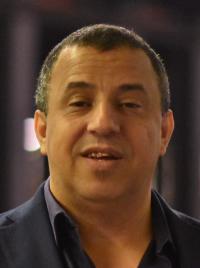
Razqallah Hakem, PhD

Scientist
Division of Signaling Biology
Advanced Medical Discovery Institute/Ontario Cancer Institute

Keywords: mouse model, gene targeting, tumor suppressors, autoimmunity, cancer, apoptosis, DNA damage repair 

Research Interests
Molecular Mechanisms of Apoptosis and DNA Damage Repair in Animal Models
Cancer is a disease which arises when multiple cellular alterations cooperate to create a state of uncontrolled cellular growth. These alterations arise as a result of genetic mutations that disrupt a pleiotropy of cellular processes. Maintenance of genomic integrity and programmed cell death (apoptosis) are two crucial cellular processes, that when disrupted, often lead to cancer.

Our laboratory focuses on the identification and functional study of oncogenes and tumor suppressor genes that control genome integrity and apoptosis and the consequences of the removal of these genes. Our hypotheses are predominantly tested using techniques including molecular biology, biochemistry and cellular biology in the context of the whole animal using knockout and trangenic mouse models.

The notion that disrupted apoptosis is asssociated with cancer development is well accepted. In recent studies, caspase-8 inactivation has been associated with human neuroblastomas in collaboration with N-myc amplification. In light of this, one of our ongoing projects is to investigate the in vivo role of the apoptotic protein caspase-8 and its importance in cancer.

We have generated mice lacking caspase-8 in the T-cell lineage and have made the exciting finding that in addition to its important proapoptotic function, caspase-8 is also essential for T-cell homeostasis and proliferation. The molecular mechanism of this novel caspase-8 function, its function in other tissues and in tumour suppression will be the focus of ongoing studies. Furthermore, we are currently investigating the in vivo function of other proteins that may play important roles in apoptosis. These studies include two p53 regulated genes: PIRH2 and Puma.

In addition to apoptosis, the other focus of my research is the discovery and characterization of molecules involved in maintaining genome stability and DNA repair. We have identified various novel genes and their in vivo function has been or is currently being characterized in mouse models. These genes include: Mus81, eme1, eme2, and Lats2 .

Mutation of these genes in cells leads to a loss of genomic integrity, an established hallmark for cancer. For example, we have demonstrated that Mus81 mutation in mice facilitates cancer development. We are currently investigating the molecular mechanism of function of Mus81 (and its partners Eme1 and Eme2) and Lats2 and their relevance to human malignancies.

Another important focus of my laboratory is the investigation of the function and molecular mechanism of the tumour suppressor BRCA1. Inactivation of BRCA1 in humans is associated with familial breast and ovarian cancer. We have shown that Brca1 mutation leads to increased genomic instability that results in apoptosis and proliferative arrest, as a consequence of the activation of cellular checkpoints. Therefore, the inactivation of checkpoints is critical for survival and malignancy in BRCA1 mutated cells. p53 loss is one such collaborating genetic event; however, the presence of wildtype p53 in many BRCA1-mutant human tumors points to the presence of other, as yet unknown, cooperating genetic mutations.

We have recently shown that mutation of Chk2, similar to p53 mutation, facilitates Brca1-associated tumorigenesis. We are currently investigating 1) the role of other checkpoint proteins essential for p53 activation (ATM, ATR, Chk1) and 2) the role of apoptosis inhibition on Brca1-associated cancer.

Through these studies and collaborations with various groups we strive to further understand the functions of these proteins, the pathways that they affect and their role in human cancers. Answering these questions will bridge the gap between the lab and the clinic, and further validate the use of transgenic and knockout mouse models to study not only biological questions, but also to serve as indispensable tools to evaluate therapeutic strategies.

Pubmed Publications
Perform an automatic PubMed search of this researcher's publications.
 
 
Selected Publications

  • Ashwin Pamidi, Renato Cardoso, Anne Hakem, Elzbieta Matysiak-Zablocki, Anuradha Poonepalli, Laura Tamblyn, Bayardo Perez-Ordonez, M. Prakash Hande, Otto Sanchez and Razqallah Hakem. Functional Interplay Of p53 And Mus81 In DNA Damage Responses And Cancer. Cancer Research. 67(18):8527-8535. 2007.

  • Binidicte Lemmers, Leonardo Salmena, Nicolas Bidhre, Helen Su, Elzbieta Matysiak-Zablocki, Kiichi Murakami, Pamela S. Ohashi, Andrea Jurisicova, Michael Lenardo, Razqallah Hakem, and Anne Hakem. Essential Role For Caspase-8 In Toll-Like Receptors And NFkB Signaling. J Biol Chem. 282: 7416-7423, 2007.

  • McPherson J.P, Hande M.P, Poonepalli A, Lemmers B, Zablocki E, Migon M, Shehabeldin A, Porras A, Karaskova J, Vukovic B, Squire J, and Hakem R. 2006. A role for Brca1 in chromosome end maintenance. Human Molecular Genetics. 15: 831-838, 2006.

  • Salmena, L. and Hakem, R. Caspase-8 deficiency in T cells leads to a lethal lymphoinfiltrative immune disorder. J Exp Med, 202: 727-732, 2005.

  • McPherson JP, Lemmers B., Chahwan R., Pamidi A., Migon E., Matysiak-Zablocki E., Moynahan ME., Essers J., Hanada K., Poonepalli A., Sanchez-Sweatman O., Khokha R., Kanaar R., Jasin M., Hande MP., Hakem R. (2004). Involvement Of Mammalian Mus81 In Genome Integrity And Tumour Suppression. Science 304:1822-1826.

  • McPherson JP, Tamblyn L, Elia A, Migon M, Shehabeldin A, Matysiak-Zablocki E, Lemmers B, Salmena L, Hakem A, Fish J, Kassam F, Squire J, Bruneau B.G, Hande M.P and Hakem R (2004). EMBO.J 23: 3677-3688.

  • McPherson JP, Lemmers B., Hirao A., Hakem A., Abraham J., Migon E., Matysiak-Zablocki E., Tamblyn L., Sanchez-Sweatman O., Khokha R., Squire J., Hande MP., Mak TW, Hakem R. 2004. Collaboration of Brca1 and Chk2 in tumorigenesis. Genes Dev. 18: 1144-53.

  • Abraham J, Lemmers B, Hande MP, Moynahan ME, Chahwan C, Ciccia A, Essers J, Hanada K, Chahwan R, Khaw AK, McPherson JP, Shehabeldin A, Laister R, Arrowsmith C, Kanaar R, West SC, Jasin M, Hakem R. 2003. Eme1 is involved in DNA damage processing and maintenance of genomic stability in mammalian cells. EMBO 22:6137-47.

  • Salmena L, Lemmers B, Hakem A, Matysiak-Zablocki E, Murakami K, Au PY, Berry DM, Tamblyn L, Shehabeldin A, Migon E, Wakeham A, Bouchard D, Yeh WC, McGlade JC, Ohashi PS, Hakem R. 2003. Essential role for caspase 8 in T-cell homeostasis and T-cell-mediated immunity. Genes & Development 17:883-95.

  • Leng RP, Lin Y, Ma W, Wu H, Lemmers B, Chung S, Parant JM, Lozano G, Hakem R, Benchimol S. 2003. Pirh2, a p53-induced ubiquitin-protein ligase, promotes p53 degradation. Cell 112:779-91.

  • Hakem R., Mak, TW. Animal models of tumor-suppressor genes. 2001. Annual Review of Genetics 35:209-241.

  • Mak TW, Hakem A, McPherson JP, Shehabeldin A, Zablocki E, Migon E, Duncan GS, Bouchard D, Wakeham A, Cheung A, Karaskova J, Sarosi I, Squire J, Marth J, Hakem R. 2000. Brcal required for T cell lineage development but not TCR loci rearrangement. Nature Immunology 1:77-82.

  • Hakem R, Hakem A, Duncan GS, Henderson JT, Woo M, Soengas MS, Elia A, de la Pompa JL, Kagi D, Khoo W, Potter J, Yoshida R, Kaufman SA, Lowe SW, Penninger JM, Mak TW. 1998 Differential requirement for caspase 9 in apoptotic pathways in vivo. Cell. 94:339-52.

  • Woo M, Hakem R, Soengas MS, Duncan GS, Shahinian A, Kagi D, Hakem A, McCurrach M, Khoo W, Kaufman SA, Senaldi G, Howard T, Lowe SW, Mak TW. 1998. Essential contribution of caspase 3/CPP32 to apoptosis and its associated nuclear changes. Genes & Development. 12:806-19.

  • Hakem R, de la Pompa JL, Elia A, Potter J, Mak TW. 1997. Partial rescue of Brca1 (5-6) early embryonic lethality by p53 or p21 null mutation. Nature Genetics 16:298-302.

  • Hakem R, de la Pompa JL, Sirard C, Mo R, Woo M, Hakem A, Wakeham A, Potter J, Reitmair A, Billia F, Firpo E, Hui CC, Roberts J, Rossant J, Mak TW. 1996. The tumor suppressor gene Brca1 is required for embryonic cellular proliferation in the mouse. Cell. 85:1009-23.
 
 
  Razqallah Hakem
Mailing Address
Primary Lab
Princess Margaret Hospital
10th Floor Rm 10-620
610 University Ave
Toronto, Ontario
Canada M5G 2M9

 
Email

Phone Numbers
416-946-2840(FAX)

 
Staff and Trainees
Miyuki Bohgaki
Amanda Fenton
Xioanan Wang
Li Xu
Anne Hakem
Toshiyuki Bohgaki
Renato Cardoso


    Home Institutes Researchers Facilities Support Services Programs Commercialization Ethics News About UHN Ontario Cancer Institute Toronto General Research Institute Toronto Western Research Institute